Solar-Powered Clean Water Reaches Rural Tanzania Through University of Michigan Partnership
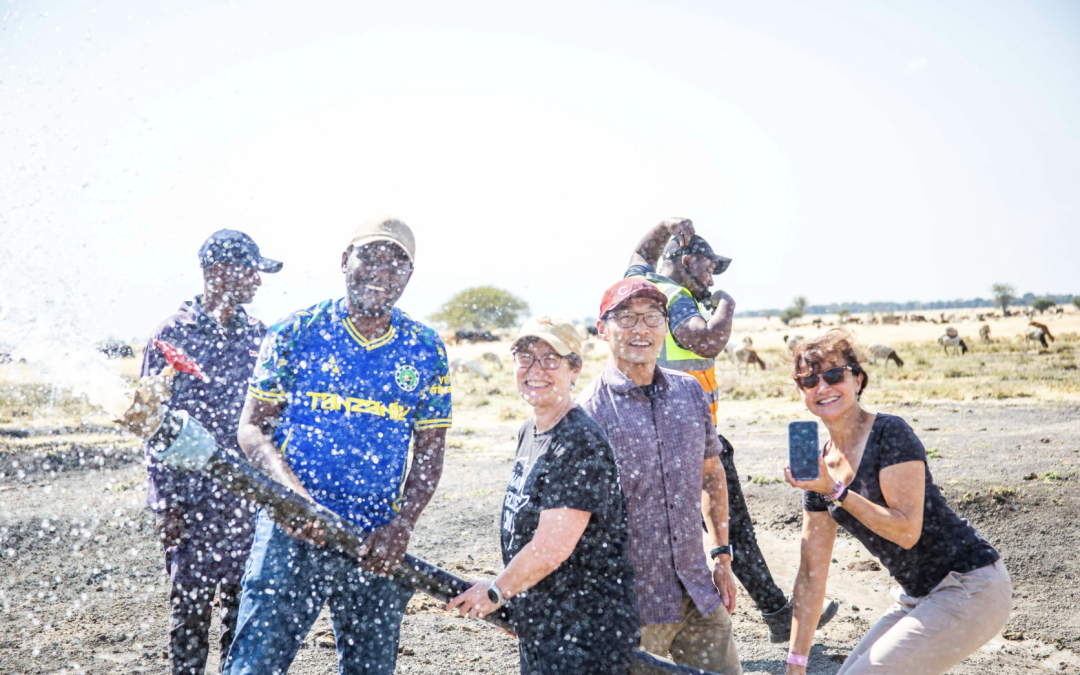
Bold Challenges Initiative team celebrates milestone as villages gain access to clean water
After two years of collaborative effort, a team of University of Michigan researchers is celebrating a major milestone in rural Tanzania: Clean, safe water now flows to Esilalei and Oltukai villages and surrounding hamlets in Monduli District, serving pastoralist families who formerly traveled long distances in search of water.
The project is expected to benefit more than 10,000 people, local health clinics, a primary school, and countless livestock, using solar power to pump and distribute water to Maasai communities. It’s a model of sustainable technology meeting the urgent global need to address water scarcity.
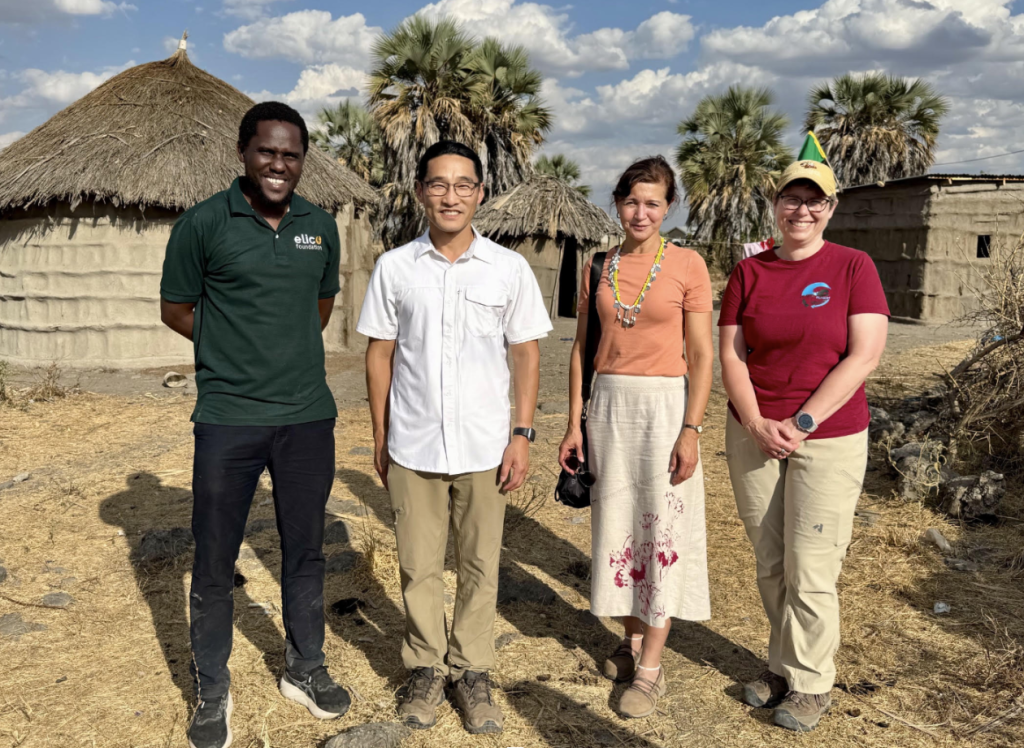
Sisty Massawe, Brian Min, Kelly Askew and Aline Cotel in Oltukai Village, October 11, 2024
The initiative was led by University of Michigan researchers Brian Min, associate professor of political science; Kelly Askew, Niara Sudarkasa Collegiate Professor of Anthropology and Afroamerican and African Studies; Aline Cotel, Arthur F. Thurnau Professor and associate professor of civil and environmental engineering, and Sisty Basil Massawe, executive director of the ELICO Foundation in Tanzania and a former fellow of the University of Michigan African Presidential Scholars (UMAPS) program. Min and Askew are affiliates of the Center for Political Studies at the University of Michigan’s Institute for Social Research.
From Solar Panels to Water ATMs
Water ATM dispensing water in Kanjiro hamlet, Esilalei Village, July 17, 2026
Through support from the University of Michigan and its Bold Challenges Initiative, ELICO Foundation installed a solar-powered pumping system in Esilalei Village, expanded the water distribution network, and introduced a prepaid water management system—delivered through “Water ATMs,” automated machines to dispense water from a natural spring about 12 miles away to ensure reliable and sustainable delivery.
“The solar-powered infrastructure eliminates dependence on fossil fuels or unreliable grid electricity to meet the realities of remote pastoral communities,” said Askew.
The team then focused on extending clean water services to Oltukai Village by connecting it to the Minjingu water supply system of the neighboring Babati District.
On July 26, the day the researchers returned from their field visits, the pipeline they helped construct with local partners ELICO Foundation and the district rural water authority (RUWASA) reached Oltukai Village.
Interdisciplinary Collaboration
The project exemplifies the Bold Challenges Initiative’s mission to support interdisciplinary teams pursuing solutions to real-world problems with potential for large-scale impact. Solutions implemented in local communities can be tested and later applied on a global scale. Selected for the 2024 Boost cohort under the title “Solar PV Water Pumping for Domestic and Livestock Uses in Last Mile Pastoral Societies in Tanzania,” the team bridges political science, anthropology, and engineering with deep local knowledge and partnerships.
The researchers bring a wide range of expertise to the community-driven initiative. Min’s research uses satellite imagery and computational methods to track energy access and reliability across the developing world: Work that has revealed the true scale of global energy poverty and the equity gaps that persist in underserved regions. Askew has conducted research in Tanzania for more than three decades, with expertise spanning land rights, rural energy access, cultural production, and Indigenous political movements. Cotel brings engineering expertise in water systems and a commitment to creating pathways for women in science and engineering.
The project is an example of the University of Michigan’s leadership in energy, climate action, sustainability, and environmental equity, bringing solutions to communities disproportionately affected.
For Maasai pastoralist families, the consequences of inadequate access to clean water include conflict over scarce resources, decimated livestock herds, forced displacement, and public health risks.
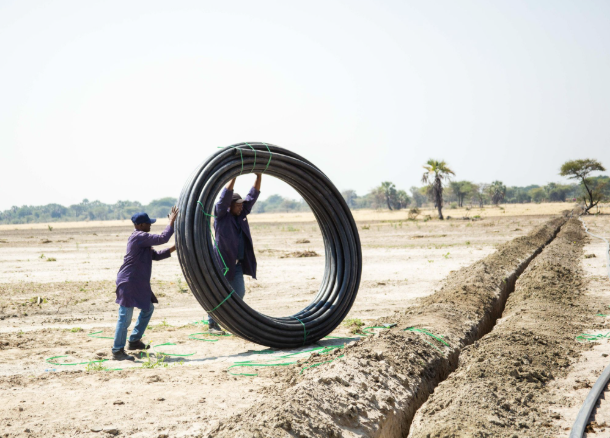
Digging the trench and preparing material for the water pipeline to Oltukai Village, July 18, 2026
The team celebrated the arrival of clean water to the Masaai communities at the end of July and will be installing ‘Water ATMs’ over the coming month to expand water access in Oltukai Village, with locations that include a health clinic and a cattle trough.
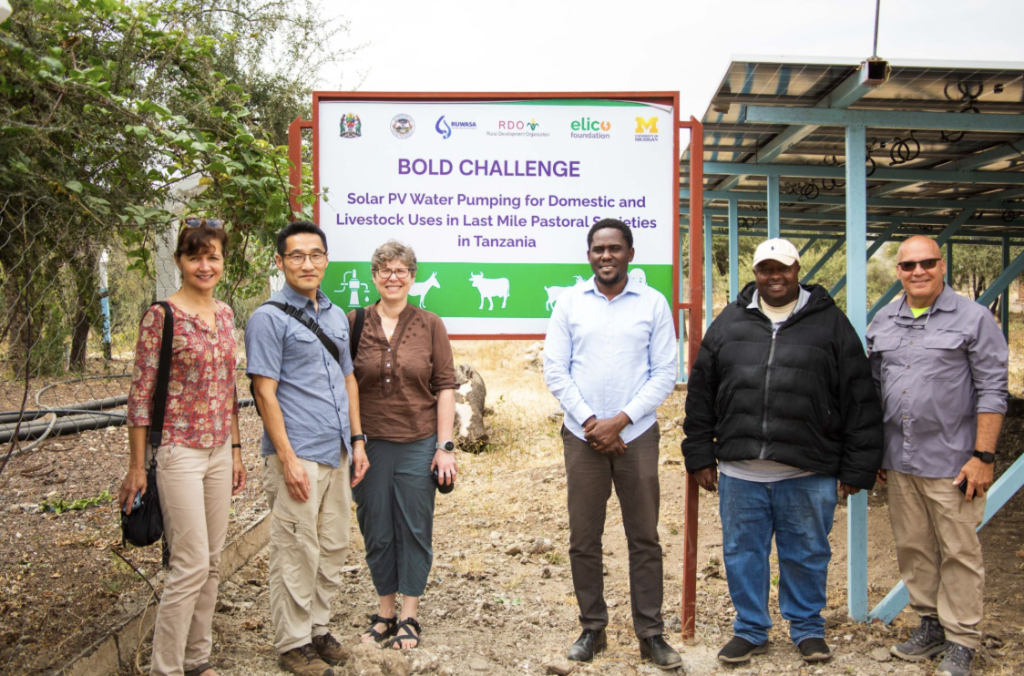
Left to right: Kelly Askew, Brian Min, Aline Cotel, Sisty Massawe, Monduli District Water Engineer Neville Msaki, John Maxwell (ReCon Corp, Michigan), July 17, 2026
This post was written by Tevah Platt, communications manager for the Center for Political Studies. Photography by Esau Ng’umbi of the ELICO Foundation.