Jun 16, 2025 | Current Events, International, Profile
A Special Exhibit opens June 19 in Berlin
This year marks the 80th anniversary of the end of World War II, and at a moment when global authoritarianism is on the rise, a tiny fraction of the people with memories of the war and Hitler’s Europe are alive today to relay their stories. It is increasingly the work of archivists and descendants to transmit the record of that time– to honor and reckon with the past, and to invoke what Elie Wiesel called “a prayer, a promise and a vow”: Never again.
A special exhibition opening June 19 at the House of the Wannsee (VAN-see) Conference Memorial and Educational Site on the outskirts of Berlin centers on the story of Fritz Traugott, a German Jewish refugee expelled from his native Hamburg, who returned to Europe as an American soldier.
Traugott was among some 10,000 “Ritchie Boys” in the U.S. Army– soldiers trained in intelligence gathering who graduated from Camp Ritchie, Maryland– and one of the 20 percent of that force who were Jewish refugees with language skills that were leveraged in the effort.
His letters to his wife at home in Providence, R.I., and photos he took at the Wannsee villa in the summer of 1945 are at the heart of the special exhibit that tells Traugott’s story but is as much about memory itself.
“In my mind, it’s not really a story about my father,” said Michael Traugott, who shared his father’s documents with Wannsee after discovering them in 2018. “I think he is kind of a vessel in this story for thinking about the 80th anniversary of the end of the war, and about what happened then, and how it relates to what’s going on now, and other events in between.”
A Portrait of Fritz Traugott
The youngest of three children, Fritz Julius Traugott was born in Hamburg in 1919. After the passage of Nuremberg Laws that sought to marginalize and separate Jews in German society in 1935, he was forced to leave the Lichtwark School, a prominent high school that emphasized cultural education and the fine arts. He remained in close contact with his classmates and his teacher, Erna Stahl, an influential educator who once characterized her own work as creating an “inner counterbalance” in her students to the “destructive, demonic denial of all human spiritual worth, especially in Germany, which could not be undone.”

A 1933/34 class photo of the Lichtwark School from the Traugott archive. Both in the back row, Fritz Traugott is third from the left, and Erna Stahl, fourth from the right. Six of the students in the photo are wearing Hitler Youth uniforms.
With professional opportunities likewise cut off, Traugott followed his brother in immigrating to the United States in 1938, and his parents followed. Traugott’s sister, Hedwig, remained in Hamburg with her non-Jewish husband and two daughters, surviving through Nazi persecution, forced labor, and the bombing of their home.
 Traugott married Lucia Scola, an Italian-American Catholic, in Providence.
At 22, he was drafted into the U.S. Army, where he was transferred to Camp Ritchie to learn counter-intelligence and interrogation techniques. He was first deployed to England to participate in the “secret listeners” program, an operation that helped record details using bugging devices to pick up conversations among German military leaders. They collected important intelligence information to help the war effort, including the location of the facility where V2 rockets were being built.
Traugott was sent to France where with his unit, Mobile Field Interrogation Unit #2, he later traveled behind American troops moving into Germany, interviewing prisoners of war. He was at the Battle of the Bulge, not as a combatant, but working feverishly to collect intelligence from German prisoners. And just after Germany’s surrender, he was billeted at the Wannsee villa from July to September 1945. His unit was housed at the former SS guesthouse that– although his unit may not have been initially aware of it– had been the site of a pivotal Nazi summit a few years prior to plan “the final solution.”
The Summer of 1945
Traugott spent more than two months at the Wannsee villa, a site referred to as “Himmler’s guesthouse,” during this early post-war period. He bought a camera in Berlin and sent pictures and daily letters to his wife in Providence, often on “souvenir” stationery from “the Führer’s adjutant’s office” he had found in the Reich Chancellery.

Based on the photos taken by Fritz Traugott, this artist rendering of the Ritchie Boys at the Wannsee villa was created for the museum by Mathis Eckelmann. Courtesy of the Wannsee Conference Memorial and Educational Site.
The photos and letters, now on display as part of the special exhibit at Wannsee, include snapshots of soldiers and prisoners of war at Wannsee, the nearby interrogation center, and the ruins of his former home he took on a visit to Hamburg.
His letters communicate his affection for Lucia and infant son, Michael, born in his absence. One personal account to his wife, written on pilfered Nazi letterhead on Aug. 10, 1945, describes how the normalization of persecution made it difficult to communicate and for outsiders to understand it:
You see sweetheart, when you live in danger, or misery, or any other extreme state, you kinda get used to it, or at least it loses most of the effect it has on outsiders.

From the Traugott archive, a letter home on the pilfered stationary of the “Adjutantur Des Führers,” August 10, 1945.
Traugott took two short visits to Hamburg to see his sister and the city he fled in 1938. On his second visit, his sister Hedwig wrote a letter to her parents describing what had happened to them under the Nazi regime. That letter, which is lost today, included details so troubling that Traugott and his brother decided not to deliver it, Michael Traugott said.
Traugott returned home in the fall of 1945.
Unearthing the Past
Traugott went on to rear three children in Providence– Michael, Mark, and Kathryn. He established his own jewelry company and later worked as a sales manager for the Colonial Knife Co.
Traugott seldom spoke to his children about his life in Germany or his time in the war. He had likely signed nondisclosure agreements during his service, his son said, and there were memories unwanted. Traugott avoided speaking German for a long period after the war and didn’t return to visit Germany for more than 25 years.
Traugott died in Palm Beach in 1995.
Lucia preserved the letters, photographs, and documents displayed in the exhibition.
It was only after her death in 2018 that their children discovered these historical sources: Over 300 letters and a few dozen photographs.
Michael initially made contact with the Wannsee Conference House with an emailed photograph of the villa with the American flag hoisted above it.
After two years of research and contact, the museum is presenting a special exhibit that centers on Traugott’s materials and experience.
History, Memory, and Extrapolation
The upcoming exhibit, which includes an audio tour in the gardens of Wannsee, brings with it a convergence of past and present, and of personal and global history that invites exploration into the legacy of perpetrators, victims, and liberators.
“Fritz Traugott’s biography, letters, and photographs provide us and our visitors with a different and new perspective on the history of the House of the Wannsee Conference,” said exhibit curator Judith Alberth. “His parents, his brother and he himself were expelled due to antisemitic persecution, and his sister, his brother-in-law, and his nieces survived the Shoah in Hamburg in desperate circumstances. Their stories add a significant perspective to the sources and biographies of perpetrators that the House is mostly linked to.”
“L’dor vador,” which translates to “from generation to generation,” is a central concept in Jewish culture, which places weighted emphasis on the passing of stories and traditions across time.
“Part of this journey recently has been a deeper recognition of this Jewish history, which we never lived, but has been brought to the forefront through the development of the exhibition,” said Michael Traugott, who had little exposure to religion aside from Catholic sacramental ceremonies growing up. “…There’s also an element of realizing opportunities that we lost to have extended conversations with our father – which he might not have wanted to participate in.”

Michael, Mark, and Kathryn Traugott, retracing their father’s steps at the Wannsee House
Traugott’s descendants– who will all attend the opening of the exhibit– have used the photographs and documents to plumb their family history. In 1994, Michael Traugott also took a trip to Berlin to retrace steps his father had taken and to reproduce photos his father had taken on the same grounds, 50 years prior.
“Sifting through the valuable sources and sorting them together can reconstruct a piece of family history,” Alberth wrote of the exhibit. “Further research, which we carried out in American and German archives, can add to the puzzle – but it will always remain fragmented.”
“This project has involved memory, but also extrapolation,” said Michael Traugott. “It’s both trying to reconstruct events of the past with relative accuracy, but thinking about how behavior, events, and belief systems might be extended forward in time to other events, and other periods.”
Traugott’s story invites us to imagine what it might have been like for a refugee to return to Germany in what his son described as “a strange re-immersion.”
Museum director Deborah Hartmann writes, for example, of what it might have meant for Traugott to appropriate stationary and souvenirs from places like the Chancellery: “The men demonstrated their own personal victory over the Nazi dictatorship,” she writes.
For Hartmann, the exhibit is also an occasion to consider how we remember past events, and the impact of memory on our political actions and national and community identities.
Research on collective memory distinguishes history and memory. French scholars Jean-Francois Orianne and Francis Eustache write that “history separates the past from the present and future, whereas memory links them together. Memory always operates in the present: it is a continual rewriting of the past in the present for future use.”
The exhibit ends with a photograph of Vice President J.D. Vance, visiting the Dachau Concentration Camp on Feb. 13, 2025. The next day, at the Munich Security Conference, Vance demanded that Germany’s far-right parties, including the AfD, not be excluded in coalition governments. AfD leaders have specifically repudiated the idea that we should educate future generations about atrocities in Germany’s past, as a safeguard to our future.
“The open and critical discourse on history is a core element of free, democratic societies,” said Hartmann. “Authoritarian governments therefore see it as a threat and seek to impose only the narratives they have set as valid. This repeatedly leads to distortions in the history of the Holocaust, which we must counter. When the leader of the far-right AFD party, in a conversation with Elon Musk on X, refers to Adolf Hitler as a ‘communist,’ and Musk agrees with her, they are denying the ideological origins of the Holocaust in racist antisemitism.”
The exhibition, which will run until next summer, opens June 19, 2025, with free daily admission from 10 to 6. The museum’s registration for the opening– which can be attended live or online– is now open.
This post was written by Tevah Platt, a communicator for the Center for Political Studies at the University of Michigan Institute for Social Research. Michael Traugott is a research professor affiliated with the Center for Political Studies and an expert on campaigns and elections, voting behavior, and political communication.
Dec 11, 2019 | Current Events, Policy, Profile, Race, Social Policy, Uncategorized
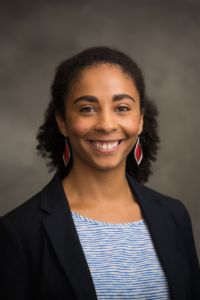
Shea Streeter
Post developed by Katherine Pearson
Shea Streeter began her graduate work in political science as a comparativist interested in state repression around the world. When the protest movement in Ferguson, Missouri exploded after the killing of Michael Brown, Streeter turned her attention to police violence and protest in the United States. As a President’s Postdoctoral Fellow at the University of Michigan, she’s examining how race and gender shape the ways that people experience, perceive, and respond to incidents of violence.
“Racial animus is in the air we breathe,” Streeter says, “but when we look at police violence, we can get distracted by race and ignore other important factors.” Her dissertation included an experiment to examine how the race of victims of police violence determines whether the public sees the violence as just. Surprisingly, she finds that the race of the victims is less salient than expected. Instead, the social context strongly shaped the attitudes of the respondents. Those who were predisposed to consider societal and institutional forces were less likely to believe the victim deserved the outcome, compared to respondents who place sole responsibility on the individual.
Racial differences in rates of protest
Half of the people killed by police each year are white, and yet the rate of protest over white victims of police violence is very low. A dataset that Streeter is currently completing includes all publicly available information on police killings and any protests that happened in 2015-2016. For those two years, about a third of the police killings of African Americans led to some sort of protest, but when whites were killed by police, protests occurred only five percent of the time. “I argue that it’s the biggest racial gap related to policing,” Streeter says. “There are a lot of reasons we could point to why African Americans would be protesting. But why wouldn’t whites also be protesting when their community members are killed?”
When conducting field research in several different cities in the United States, Streeter asked community organizers about protests for white victims of police violence. The organizers told her that they reach out to the families of white victims, but those families often do not want to be involved with protests. Instead, many white family members express understanding and forgiveness toward the police. Streeter makes sense of these reactions by tying them to the psychological concept of a belief in a just world. The idea is that people get what they deserve and they deserve what they get. Streeter observes that even when people who hold this belief lose a member of their own family, their trust in the police remains unchanged. “If you have these beliefs, it can be like a double loss,” Streeter notes, which may explain why there are fewer protests for white victims of police violence.
The role of mentorship
Mentorship has played a large role in Streeter’s academic career. Christian Davenport became a mentor to her when she was a senior at Notre Dame. At that time, Streeter was thinking about her career but hadn’t considered pursuing research. While working as a research assistant for Davenport, he encouraged her to pursue graduate work in political science. Streeter cites this support as a key reason she decided to come to the University of Michigan. She also gives credit to David Laitin and Jeremy Weinstein at Stanford, who pushed her to study the United States when she was training as a comparativist. “I had confusion about what my identity as a scholar would be if I changed paths, but they put my fears to rest, so I give them a lot of credit for helping me pursue this research path,” Streeter says.
Looking forward
In addition to her ongoing research on police violence, Streeter is turning her attention to the ways interpersonal violence affects the way that people think and act politically. She sees connections between different types of violence, including mass shootings, domestic violence, and suicide. “We don’t often see these as political violence, but they affect how people operate in the world,” Streeter says. She’s especially interested in the ways violence affects people differently based on gender. Streeter’s work is innovative and varied, but united by a common theme, which she sums up as “How does violence affect our world, and what are the aggregate consequences of that? That’s the big picture.”
Jul 23, 2019 | Innovative Methodology, Policy, Profile, Race, Social Policy, Uncategorized
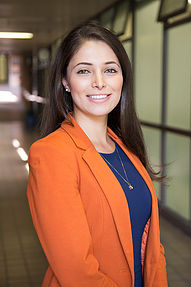 Post developed by Katherine Pearson and Angela Ocampo
Feelings of belonging are powerfully important. A sense of inclusion in a group or society can motivate new attitudes and actions. The idea of belonging, or attaining inclusion, is the centerpiece of Angela Ocampo’s research. Her dissertation exploring the effect of inclusion on political participation among Latinos will receive the American Political Science Association’s (APSA) Race and Ethnic Politics Section’s award for the best dissertation in the field at the Fall 2019 APSA meetings.
Dissertation and Book Project
Dr. Ocampo’s dissertation grounds the theory of belonging and political participation within the literature. This research, which she is expanding into a book, finds that feelings of belonging in American society strongly predict higher levels of political engagement among Latinos. This concept represents the intersection of political science and political psychology. Dr. Ocampo draws from psychology research that belonging is a human need; people need to feel that they are a part of a group in order to succeed and have positive individual outcomes, as well as group outcomes. She builds on these psychological concepts to develop this theory of social belonging in the national community, and how this influences the perception of relationship to the polity.
The book will explore the social inclusion of racial and ethnic minorities, and how that shapes the way they participate in politics. Dr. Ocampo argues that the idea of perceiving that you belong, and the extent to which others accept you, has an influence on your political engagement and opinion of policies. For the most part, Dr. Ocampo looks at Latinos in the US, but the framework is applicable to other racial and ethnic groups. She is also collecting data among Asian Americans, African Americans, and American Muslims to look at perceived belonging.
Methodological Expertise
Before she began this research, there were no measures to capture data on belonging in existing surveys. Dr. Ocampo validated new measures and tested and replicated them in the 2016 collaborative multiracial postelection survey.
While observational data is useful for finding correlations, it can’t identify causality. For this reason, experiments also inform Dr. Ocampo’s research. In one experiment, she randomly assigned people to a number of different conditions. Subjects assigned to the negative condition showed a significant decrease in their perceptions of belonging. However, among those assigned to the positive condition, there were no corresponding positive results. In both the observational data and experiments, Dr. Ocampo notes that experiences of discrimination are highly influential and highly determinant of feelings of belonging. That is, the more experiences of discrimination you’ve had in the past, the less likely you are to feel that you belong.
Doing qualitative research has taught Dr. Ocampo the importance of speaking with her research subjects. “It’s not until you get out and talk to people running for office and making things happen that you understand how politics works for everyday people. That’s why the qualitative data and survey work are really important,” she says. By leveraging both qualitative and quantitative methodologies, Dr. Ocampo is able to arrive at more robust conclusions.
A Sense of Belonging in the Academic Community
Starting in the Fall of 2020, Dr. Ocampo will be an Assistant Professor of Political Science at the University of Michigan and a Faculty Associate of the Center for Political Studies. She says that the fact that her work is deeply personal to her is what keeps her engaged. As an immigrant herself, Dr. Ocampo says, “I’m doing this for my family. I’m in this for other young women and women of color, other first-generation scholars. When they see me give a class or a lecture, they know they can do it, too.”
Dr. Ocampo is known as a supportive member of her academic community. She says it’s an important part of her work: “The reason it’s important is that I wouldn’t be here if it wouldn’t have been for others who opened doors, were supportive, were willing to believe in me. They were willing to amplify my voice in spaces where I couldn’t be, or where I wasn’t, or where I didn’t even know they were there.” She notes that in order to improve the profession and make it a more diverse and welcoming place where scholars thrive, academics have to take it upon themselves to be inclusive.
Feb 25, 2019 | International, Profile, Uncategorized
post developed by Katherine Pearson
Faida Zacharia studies access to energy and water resources for smallholder farmers in Dodoma Region in Tanzania. As a visiting scholar at the University of Michigan, she worked closely with Professor Kelly Askew to further her research on “Small-scale Groundwater Irrigated Agriculture and Livelihoods in Drylands Areas: The Case of Dodoma Region, Tanzania.”
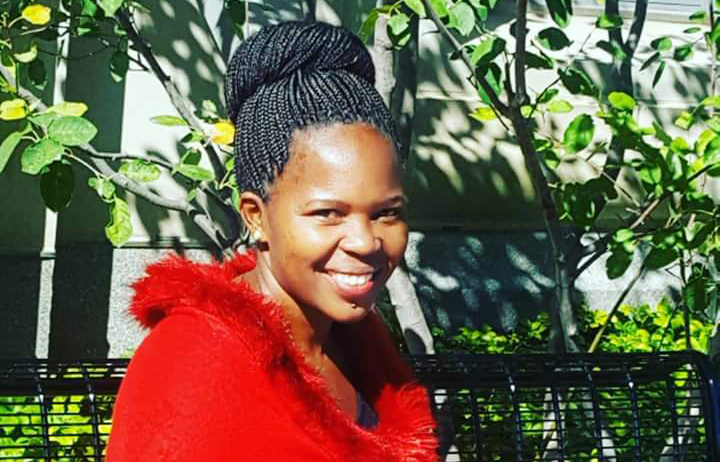
Faida Zacharia is an Assistant Lecturer in Development Studies at the University of Dodoma, Tanzania. She came to the University of Michigan as a member of the University of Michigan African Presidential Scholars (UMAPS) 2018-19 cohort.
Addressing groundwater irrigation in Dodoma
“Water wars” are on the rise around the world as access to fresh water becomes ever more limited. Countries around the world are facing increased demand for water at a time when fresh water is becoming an ever more scarce resource. Food security and economic development depend on access to water, hence developing countries like Tanzania are seeking new means of increasing access to water for all the needs of its population.
In Dodoma, a semi-arid region in Tanzania, access to fresh water is a challenge. Climate change, industrial activities, and political conflicts all threaten the available water supply. The region has various reservoirs to collect surface water, among them Msalato reservoir, Mkonze dam, Hombolo dam, Bahi dam and Makutupora dam. Mtera dam, the largest dam in Tanzania, is also the primary source of electricity for the national grid. But despite all of these resources, Dodoma faces a shortage of water.
People in Dodoma rely on smallholder farming and livestock keeping for their livelihoods, but the recent rapid growth of this region has put additional pressure on water resources necessary for agriculture. When President John Magufuli was elected in 2015, he declared that Dodoma City would be the political capital of the country, and required all government ministries relocate from Dar es Salaam to Dodoma. People came to Dodoma from other regions of Tanzania, increasing the demand for water for household uses, for industry, and for agriculture beyond what the reservoirs could sustain. Tapping into groundwater resources may provide a solution.
Zacharia is developing new research that will explore how groundwater irrigation in Dodoma region contributes to agriculture and food security, and how it helps poverty reduction in the drylands of central Tanzania. Her research maps the groundwater in the region to establish how much there is and where it is located. This baseline data and knowledge will help to initiate, implement, and sustain groundwater irrigated agriculture in Tanzania.
Zacharia wants to know who benefits and who does not when groundwater irrigation is established in smallholder farming communities. Groundwater irrigated agriculture may prove to have great potential as a strategy that mitigates the impact of climate change on agricultural communities. These findings will inform the policy decision-making process and strategies related to small-scale groundwater irrigated agriculture to enhance the livelihoods of drylands communities.
Zacharia’s research supports sustainable development of infrastructure through an integrated approach to water management to balance the competing needs of agriculture, human consumption, industry, and environmental conservation. In the rush to secure more water, she cautions against a lack of planning that lead to the present water crisis in Cape Town, South Africa and other sites in China, India, and California where groundwater aquifers have been depleted.
Experience of a visiting scholar
Zacharia says that her time at the University of Michigan has been essential to advancing her research. Her fellowship allowed her to work closely with her mentor to receive support and feedback on her research. Zacharia presented research at two conferences during her visit: the Sustainability and Development Conference at the University of Michigan, and the African Studies Association annual meeting in Atlanta, Georgia. She said that the experience of attending the conferences and presenting work to her peers was one that she is eager to repeat. “It has changed my entire outlook and attitude towards life of academics,” Zacharia said.
Access to the university libraries was another important benefit of her time as a visiting scholar. Zacharia said that the wealth of research resources, and the efficiency of accessing them, was important to conducting her work. She worked closely with experts in geographic information systems (GIS) to map groundwater data. Other visiting scholars, especially those from Uganda, Ghana, and Nigeria, supported Zacharia’s research by reviewing her work and providing new insights. She expects that the relationships she has built during this program, with faculty and other scholars, will extend long into the future. “It’s not easy to find someone to give you the support like I get here,” said Zacharia. “That support makes me more comfortable to start my research.”
Zacharia returns home to Tanzania at the end of February, where she will apply to PhD programs to continue her work. We wish her all the best and look forward to future partnerships with her.
Nov 30, 2017 | Elections, Profile
Post by Theresa Frasca
Earlier this year, the National Academy of Sciences (NAS) announced the election of the Institute for Social Research’s Donald Kinder, the only University of Michigan professor to be named in 2017 and the 28th professor to be named in U-M’s history. Established by Congress in 1863, the private, non-profit NAS promotes science through its consortium of more than 2,000 distinguished scholars, of which nearly 500 have won Nobel Prizes. NAS serves as an independent advising entity to the government, and provides recommendations and guidance on matters of scientific or technological importance to the nation.
Donald Kinder
“It is a thrilling surprise to be elected to the National Academy of Sciences,” says Kinder. “I was very pleased when I received the call about my election, and I look forward to working with members on a variety of new projects.” As a member, Kinder will attend NAS membership meetings and help review papers for the multidisciplinary journal, Proceedings of the National Academy of Sciences, as well as provide his expertise on subject-related projects or efforts.
Kinder, a Research Professor at ISR’s Center for Political Studies, is notable for his research on prejudice and how it impacts contemporary American politics. “Most of my work over the last 20 years has focused on racial politics in the United States, as I’ve tried to understand the foundations of public opinion and the role that race plays in elections,” says Kinder. “This area of study has been a long-standing interest of mine that actually started in graduate school. I was in a specific time in a specific place at UCLA in the early 1970s and I became interested in how white suburban voters were affected by the racial identity of one of the mayoral candidates.”
More recently, Kinder’s work has revolved around ideology in the study of American politics and his newest book, Neither Liberal Nor Conservative, debuted in May. “This book is about American politics and how American elites seem highly ideological yet most American citizens are not,” says Kinder. “This is a condition that has been present over the past 50-60 years. In some ways, it’s a surprising argument to make because people who study politics and think about politics usually make the presumption that ordinary people think deeply about politics, too. But the reality is that regular citizens have better things to do with their lives and, as a consequence of that, their thinking is more casual and less organized and certainly less ideological.” The book, written with Louisiana State University professor, and U-M grad, Nathan Kalmoe has received several long-form journalism reviews including in VOX and Washington Monthly.
As Kinder reflects on both his current work and his new election to NAS, he says, “I’ve been at U-M for going on 40 years and what I love about the place is the endless parade of super smart graduate students who come through. I think of my election to the National Academy of Sciences as a reflection of this remarkable place, my great colleagues and wonderful students.”
Oct 29, 2015 | International, Law, Profile
Post developed by Yioryos Nardis in coordination with Barbara Koremenos.
 Barbara Koremenos, Center for Political Studies faculty member and Professor of Political Science at the University of Michigan has recently begun a Visiting Research Fellowship at the Kroc Institute for International Peace Studies at the University of Notre Dame. The Kroc Institute is devoted to the study of the causes of violent conflict and strategies for sustainable peace. She was awarded the Fellowship to spend the 2015-2016 year studying the relationship between Islamic states and international law, and to examine how this affects Islamic states’ participation in international agreements and ultimately the peaceful resolution of differences.
Koremenos was inspired by looking at a random sample of international agreements in the issue areas of economics, environment, human rights, and security drawn from the United Nations Treaty Series (UNTS), which is by far the most popular place to register international agreements. She was struck by the fact that not a single agreement in her sample was composed solely of Islamic states. Within the sample, Egypt participated in the most agreements (25 agreements) while Oman had the lowest participation rate (seven agreements). With the exception of Malaysia, every other state in the sample participated in at least as many (usually more) human rights agreements than agreements in any of the other three issue areas. Within the sample, Lebanon participated more than any other Islamic state in environmental agreements at a quite low number of five.
Even more striking, participation in multilateral agreements seemed to far outweigh participation in bilateral agreements, even though bilateral cooperation is more prevalent worldwide when looking at the entire UNTS population. This is also true when looking at the sample featured in Professor Koremenos’ Continent of International Law (COIL) research program.
In the UNTS sample, over half of the Islamic states participated in no bilateral agreements; Egypt was the state that participated in the most bilateral agreements (six agreements) followed by Oman and Indonesia at two bilateral agreements each.
Koremenos will use her fellowship this year to examine whether:
- Islamic states simply participate in fewer international agreements than non-Islamic states
- With respect to participation in international agreements, there is variation within Islamic states that can be explained by whether Shari’a is officially adopted in a state’s constitution
- Islamic states participate in international agreements that are not registered with the UNTS;
- Islamic states participate in relatively more informal international agreements
Answers to these questions will give a sense of the amount of “failed cooperation” in those states – that is, cooperation that is precluded because certain institutional design tools, that might be key to solving the cooperation problems facing states, are disallowed by Shari’a Law – and, to begin to suggest larger relationships that might impact key factors in the world of peace and conflict like economic growth.