Mar 27, 2014 | Innovative Methodology, International, Profile
Post developed by Katie Brown in coordination with Muzammil Hussain.
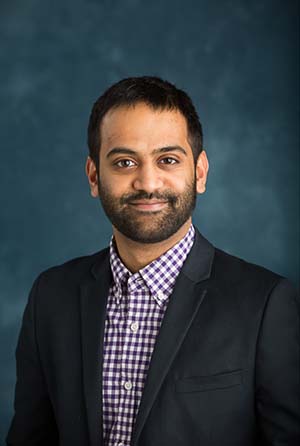 This post is a special edition of our researcher profile series. We’re very pleased to welcome Muzammil Hussain to the Center for Political Studies (CPS)!
Hussain’s research began in 2005 at University of Wisconsin – Madison, where he completed his Bachelor of Science degree at the School of Journalism and Mass Communication. Intrigued by political communication research, Hussain sought to take the American orientation of the field into parallel domains. In particular, he turned to Bangalore, India – his hometown. Hussain received a fellowship to study the social contexts and consequences of “new media” in Bangalore internet cafes, covering all types of neighborhoods: slums, religious, separated, and class-based. He also applied a variety of methods to his fieldwork in these diverse contexts.
His research interests intensified at the University of Washington, where he relocated in 2008 to pursue his M.A. and Ph.D. in Communication. Over the last three years, Hussain has shifted his research focus to political systems. In particular, his research asks how technology diffusion is a politicized, transnational project. That is, how the deployment of new internet infrastructure not only shapes the ways people use digital media in political ways, but fundamentally how these new opportunities for participation and mobilization are afforded, structured, and regulated by state powers.
His research has culminated in two book projects. Democracy’s Fourth Wave? Digital Media and the Arab Spring (OUP 2013) compares the Arab Spring in depth in 22 nations. State Power 2.0 (Ashgate 2013) is an edited volume that includes scholars from advanced democratic, authoritarian, and emerging democratic nations.
Through his field research and international stays, Hussain has seen first hand the key role state governments play in the evolution of media systems. In the future, he seeks to bring governmental systems, not just social actors, into the equation of his research. Post-internet democracies, Hussain says, are characterized as increasingly technocratic. Comparative analysis shows both advanced democracies and recalcitrant dictatorships treating public information infrastructure in surprisingly similar ways.
Muzammil Hussain is excited to be a member of both the Department of Communication Studies and the Center for Political Studies. He seeks to root his research in the areas of media studies and political communication, while drawing on the comparative ethos of political studies. These lenses allow a more comprehensive picture of comparative digital politics to emerge. Before relocating to Ann Arbor this January, Hussain completed a fellowship at the Qatar Computing Research Institute (Doha, Qatar) investigating digital activism surrounding the post-Arab Spring electoral politics in Tunisia and Yemen.
Mar 20, 2014 | Current Events, Elections, Innovative Methodology, International
Post developed by Katie Brown in coordination with Kirill Kalinin.
Photo credit: Thinkstock
An earlier post on the Center for Political Studies (CPS) Blog covered Kirill Kalinin’s work concerning election fraud in Russia. That post showed evidence from empirical work that polls ahead of the 2012 Russian presidential election were flawed, setting the stage for subsequent election fraud. This post returns to Kalinin’s work to consider why.
Political Science Ph.D. candidate Kirill Kalinin studies election fraud. Along with Professor of Political Science, Professor of Statistics, and Center for Political Studies Faculty Associate Walter Mebane, Kalinin authored a paper – Understanding Electoral Frauds through Evolution of Russian Federalism: from “Bargaining Loyalty” to “Signaling Loyalty” – arguing that Russia’s election fraud can be understood as rooted in federalism and a formal signaling game model.
Kalinin and Mebane support this argument with empirical analysis. The researchers find that the occurrence of 0s and 5s in the last digit of election turnout percentages to be suspicious. In fact, using statistical modeling, they find it to be linked to election fraud connected with post-election rewards and punishments. From 2000 on, fraud appears to be widespread.
But why? In 2000, Putin came to power and initiated a process of recentralization. From the mid 1990s through the 2000s, regional governors made changes based in rational strategy to Russia’s federal relations.
In the mid-1990s, the central government rewarded governors with political, institutional, and financial resources in exchange for favorable election results. In the 2000s, this escalated to election fraud.
As Kalinin concludes, “Over the most recent election cycles Russian elections have become increasingly unfree and unfair, characterized by suppression of electoral competition, rising levels of administrative interference and drastic growth of electoral frauds.” That is, the rewards for fraud have rendered Russian elections inherently fraudulent.
Mar 5, 2014 | Conflict, Current Events, Foreign Affairs, International
Post developed by Katie Brown in coordination with Muzammil Hussain

Photo credit: Thinkstock
In recent weeks, massive protests have swept through Venezuela and Ukraine. Instagram and Twitter have been featured as playing a key role in the latter. Digital activism is increasingly attributes to helping spark rapid waves of mobilization across several recent international cases.
Center for Political Studies (CPS) faculty associate and assistant professor of communication Muzammil Hussain studies the role of technology in protest. With Philip N. Howard of the University of Washington, Hussain published an article weighing the roles of Internet infrastructure and mobile telephony in the Arab Spring mobilizations.
Though in a different area of the world, understanding the role of communication systems, the political uses of digital media, and the politicization of internet infrastructure in the Arab Spring can help shed light on the current wave of democratization. Hussain argues that information technologies do not cause political change, but they have become a consistent tool and space to afford and act out political contentions.
To understand the relative success of the Arab Spring across different countries in the Middle East and North Africa, the authors look at a variety of contextual factors, including income, wealth distribution, unemployment, demographics, digital connectivity, censorship, and economic dependence on fuel. In the article, they examine the impact of these factors on regime fragility and social movement success. Interestingly, they argue that the inciting incidents in each country were digitally mediated. The describe how digital communication sets off a six-stage process of political mobilization experienced in both successful and failed attempts for regime change.
The authors conclude that “information infrastructure – especially mobile phone use – consistently appears as one of the key ingredients in parsimonious models for the conjoined combinations of causes behind regime fragility and social movement success.” That is, digital communication networks, especially mobile phones, drive political upheaval. In addition to offering insight into the Arab Spring experiences, this may also help explain the recent successful ousting of Ukraine’s president.
Feb 20, 2014 | Innovative Methodology, International
Post Developed by Katie Brown and Mark Tessler.
 This is the first in a series of posts profiling innovative research projects associated with the Center for Political Studies (CPS) which make their data available at no cost for the public good. Today, we look at the Arab Barometer.
The Arab Barometer is a multi-wave, multi-country political attitude survey. Questions asked concern politics and government, religion and its political role, international affairs, and women’s rights, and status and gender relations.
The first wave of the Barometer surveys, which were carried out in 2006-2007, encompassed Algeria, Jordan, Kuwait, Lebanon, Morocco, the Palestinian Territories, and Yemen. The second wave of surveys, which were conducted in late 2010 and during 2011, included Algeria, Egypt, Iraq, Jordan, Lebanon, the Palestinian Territories, Saudi Arabia, Sudan, Tunisia, and Yemen. The surveys in Egypt and Tunisia and most other countries were conducted in the aftermath of the Arab Spring. The third wave of data collection, which will offer even greater contributions, is currently under way and nearing completion. Conducted in transitioning post-Arab Spring societies, the data will gauge attitudes toward elections, government performance, and Islam’s role in government and political affairs.
The Arab Barometer serves both scholars and policy makers. Thanks to the cross-national and longitudinal nature of the data, comparisons can be made across countries and over time. This is especially important given the unfolding of the Arab Spring during the second of three waves of Barometer surveys. A growing number of publications utilize Arab Barometer data. Findings have also been disseminated to policy makers through the Middle East Channel and other outlets and venues.
CPS research professor and University of Michigan professor of political science Mark Tessler and Princeton University associate professor of politics Amaney Jamal are among the co-directors of the Arab Barometer. They and others on the Arab Barometer Steering Committee work with on-the-ground teams in participating Arab countries. Associations with which the Barometer work include the Arab Reform Initiative, an international Arab organization that works for political reform, and the Global Barometer, a world-wide network of regional democracy barometers.
In 2010, the American Political Science Association (APSA) awarded the Arab Barometer the Lijphart, Przeworksi and Verba award for the best publicly available data set in comparative politics.
Feb 18, 2014 | Current Events, Elections, Innovative Methodology, International
Post developed by Katie Brown in coordination with Kirill Kalinin

Photo credit: Thinkstock
In March of 2012, Vladimir Putin was elected to his third term as President of Russia, after a four year leave serving as Prime Minister. Massive protests and speculation about electoral manipulation and fraud accompanied the election. Yet at the same time, polls ahead of the election predicted a landslide victory by Putin.
Are both the polls and election results incorrect? Could this be explained by social desirability?
Political Science Ph.D. student Kirill Kalinin studies election fraud. Along with Professor of Political Science, Professor of Statistics, and Center for Political Studies (CPS) Faculty Associate Walter Mebane, Kalinin conducted a series of studies that consider the role of social desirability (or the tendency to answer questions not truthfully but in line with public opinion) in the most recent Russian presidential election. This work is possible due to financial assistance from the Department of Political Science at the University of Michigan, Weiser Center for Emerging Democracies at the University of Michigan, and fruitful cooperation with Henry Hale (George Washington University) and Timothy Colton (Harvard University) within the project of Russian Election Study.
Kalinin focuses on a particular kind of social desirability: preference falsification. Preference falsification pertains to when an individual’s private preferences diverge from public preferences in the context of an election. In the case of Russia 2012, Russian public opinion overwhelmingly supported a strong ruler, i.e., Putin. But did this then push people who would vote against Putin to report to pollsters they planned to vote for him anyhow?
To test this, Kalinin and Mebane conducted a series of list experiments. Run in the month before and after the 2012 election, potential Russian voters were given a list with four statements. Those randomly selected into the sensitive statement condition saw a fifth statement, either about Putin’s electoral support or about voter turnout. Participants indicated how many of the statements they agree with.
Their results overwhelmingly point to preference falsification both ahead and after the election. Specifically, there appears to have been over-reporting both of turnout and electoral support for Putin.
Kalinin concludes that, “In an authoritarian setting like Russia, covering up election fraud is important. This study, however, shows that electoral polling may also be susceptible.” This sets the stage for subsequent election fraud. That is, if Putin is mis-predicted to win, then election fraud can make this win a reality. Poll and election results match but neither is true.
Feb 11, 2014 | International
Post developed by Katie Brown and Bill Zimmerman.
On December 16, 2013, Center for Political Studies (CPS) Research Professor Emeritus Bill Zimmerman hosted a very special video conference. Zimmerman and his colleagues from the European University at St. Petersburg celebrated the success of nearly a decade of Carnegie Corporation grants designed to train a new generation of Russian social scientists.
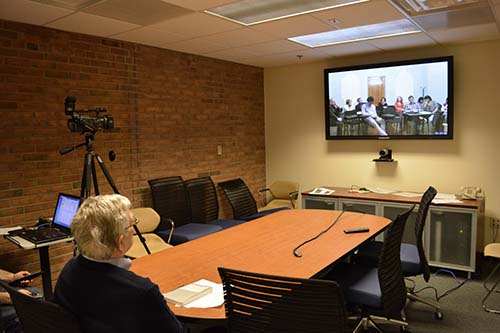
The mission of the project – officially called “Training a New Generation of Russian Social Scientists and Diffusing Social Science Expertise to Russian Regional Universities” – was twofold. First, place young scholars in regional universities in Russia to narrow the social science gap between the capitals (Moscow and St. Petersburg) and the rest of the country. Second, bring aspiring researchers to the University of Michigan to offer further social science training.
After several generous renewals from Carnegie, the program was completed on December 31, 2013, having provided support for 22 emerging scholars. Last month, nearly all participants were able to gather together by video conference to share their experiences. Joining them was Professor Eduard Ponarin, co-investigator of the project and himself a University of Michigan Ph.D. Beginning at 5 p.m. Moscow time (8 a.m. in Michigan), the event lasted approximately two hours. Those in Russia concluded the meeting with dinner.
Speaking a month after the conference celebration, Zimmerman reflected on the event and the program more generally. One unanticipated benefit of the effort was that it resulted in several bright people from regional universities enrolling in the M.A. program of the European University at St. Petersburg. Not surprising was how sharp the Russian scholars were who spent time at the Center for Political Studies. The Russians scholars gained a lot from exposure to what Michigan has to offer, and Michigan was benefited by their presence.
One example of this was contributions by the visiting scholars to the intellectual life of the Center for Political Studies and the University more generally. Three noteworthy examples of successes of the program come to mind. Kirill Kalinin is currently in the last stages of writing his dissertation at Michigan, working primarily with Walter Mebane. Yegor Lazarev, now in the Ph.D. program at Columbia, has a forthcoming paper in the journal World Politics which was originally penned for a seminar taught by Ted Brader. Finally, a paper that was revised by Kirill Zhirkov while he was at Michigan has just appeared in the journal Party Politics. The Center and University are very proud of the Carnegie Scholars and their peers that will undoubtedly be leaders of the next generation of Russian scholars.