Oct 7, 2014 | Innovative Methodology, International, Social Policy
Post developed by Katie Brown and Ugo Troiano.

Photo credit: ThinkStock
Around the globe, the average maternity leave is 118 days, but with a lot of variation. Maternity leave periods range from 45 days in Bahrain and the United Arab Emirates to 480 days in Sweden. Why the difference? And, moreover, does the variation relate to gender discrimination?
Assistant Professor of Economics and Center for Political Studies (CPS) faculty associate Ugo Troiano, along with Yehonatan Givati of The Hebrew University of Jerusalem Law School, investigated these questions and published their results in an article in The Journal of Law and Economics.
Their core theory is simple: maternity leave is costly to employers, so when the government mandates long periods of maternity leave, women may be discriminated against and receive lower wages as a result. However, places with a low tolerance for pay gaps won’t let that happen, and the incidence of this policy ends up being shared across genders. As a consequence, it becomes more economically “optimal” to enact longer mandatory maternity leaves in societies that are not discriminatory toward women. This theory is consistent with the empirical evidence.
The authors show that maternity leave is indeed shorter in societies where survey respondents think that men should receive preferential treatment in the workplace. The authors measure this attitude through a World Values Study question that asks level of agreement with, “When jobs are scarce, men should have more right to a job than women.” Aggregated to the national level and combined with data on the length of maternity leaves, they find the two are related.
However, that evidence alone does not allow us to conclude that culture is causing a longer leave, because it’s possible that causation goes in the opposite direction: a longer leave is causing more tolerant attitudes toward women. In order to alleviate this concern, Givati and Troiano looked at a proxy from attitudes less likely to change because of maternity leave: language. Specifically, they developed a measure from recent research in psychology and linguistics known as linguistic relativity suggesting that language shapes thought. Following from this, they analyzed the number of gender-differentiated pronouns across languages to see if this corresponded to tolerance of gender discrimination. For example, English uses one gender-differentiated pronoun associated with gender and the number of people referenced, while Spanish uses three (see the table below). In all, Troiano and Givati tallied the number of gender-differentiated pronouns in 33 languages using grammar books, and they looked to see whether the number of pronouns was negatively correlated with gender tolerant attitudes.
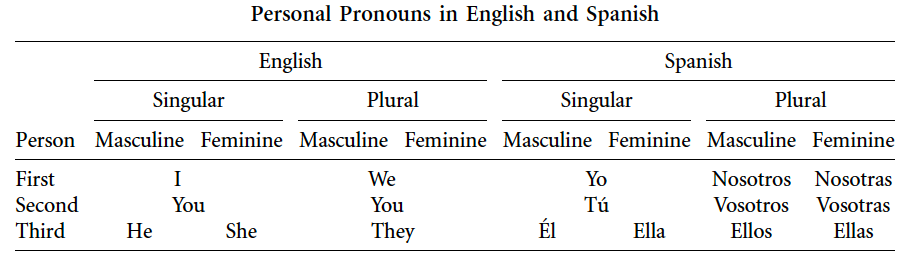
The authors indeed find a connection, with more gendered pronouns correlated with greater tolerance of gender discrimination as measured by the World Values Survey question. Next, the authors estimated a regression model, with length of maternity leave as the dependent variable and number of gendered pronouns as the independent variable. Troiano and Givati find that the more gendered pronouns, the shorter the maternity leave. Or, on the flip side, the fewer gendered pronouns, the longer the maternity leave.
Troiano concludes, “This project is an example of how concepts from different social sciences can be used to answer specific policy questions. To understand the factors that affect the variation of maternity leave across countries we integrated economic concepts (incidence of a policy), sociological ones (measuring attitudes from survey) and linguistic ones.”
Sep 18, 2014 | Foreign Affairs, International, Profile
Post developed by Katie Brown and Nahomi Ichino.
This post is a special edition of our researcher profile series. We’re very pleased to welcome Nahomi Ichino to the Center for Political Studies (CPS)!
Ethnic politics and voter behavior in developing countries have long fascinated Nahomi Ichino. She partly attributes this to the relative homogeneity of Japan. The idea that people could be divided across many different ethnic groups and that this could be a major impediment for people to work together to make decisions for society as a whole seemed foreign and therefore intriguing to Ichino. News coverage of the 1983-1985 famine in Ethiopia sparked her interest in developing countries and Africa in particular.
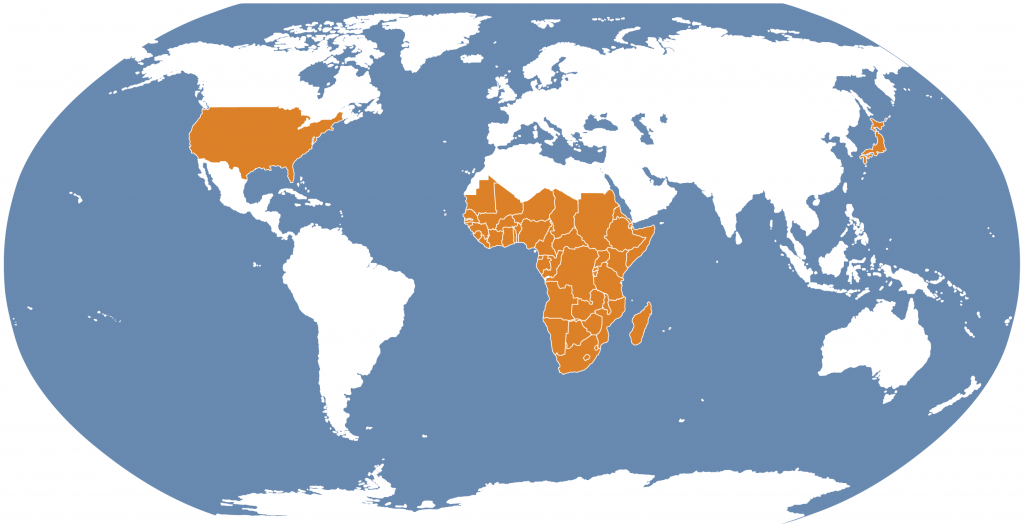
As an undergraduate at Yale University, Ichino took a class on economic development in Africa with Christopher Udry. The course focused on how individuals in poor societies coped with risk and the lack of information as they made economic decisions like saving, borrowing, and lending money, or investing in the education of male and female children. Even as Ichino went onto study more macro-level political topics like political parties, she kept an interest in how individuals made political decisions in these environments.
After graduation with a degree in political science, Ichino continued to study this topic through graduate school, earning a Ph.D. in political science from Stanford University in 2008. She then joined the faculty at Harvard University’s Department of Government. Ichino continued to focus on sub-Saharan Africa during her time at Harvard, where she considered ethnic politics and voter behavior in developing democracies. With support from the National Science Foundation, she conducted research in Ghana, and produced a number of articles. Ichino has also conducted fieldwork in Uganda, Nigeria, Benin, Malawi, and Zambia. She also writes on methodological issues. Her work has been featured in the American Political Science Review and the American Journal of Political Science, among others.
Sep 10, 2014 | Conflict, Current Events, Elections, Foreign Affairs, International
Post developed by Katie Brown in coordination with Khalil Shikaki and Mark Tessler.
Photo credit: ThinkStock
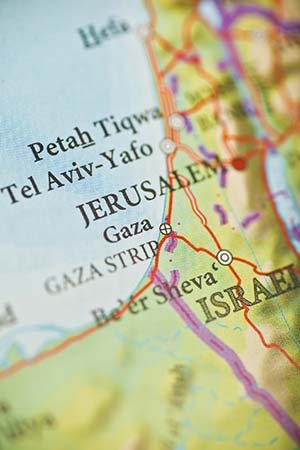
This summer witnessed intense fighting between Israel and Gaza. With tens of thousands of rockets fired, the conflict killed more than 2,000 Palestinians, mostly civilians, and 80 Israelis, mostly soldiers. How has the most recent conflict affected Palestinian attitudes?
The Palestinian Center for Policy and Research (PCPSR) conducted a survey to gauge this impact. PCPSR is run by Khalil Shikaki. This year, Shikaki is a visiting scholar at the Center for Political Studies (CPS), working closely with CPS Research Professor and expert on the Middle East Mark Tessler. In this post, we offer results from PCPSR’s study along with insight from Tessler to understand the impact of the conflict on Palestinian public opinion.
PCPSR surveyed 1,270 adults in 127 locations across the West Bank and Gaza Strip between August 26 and August 30, 2014, coinciding with the first lasting ceasefire of the conflict. Results suggest that a significant majority (79%) of the Palestinian public views Hamas as the conflict’s winner. Just 3% believe Israel emerged victorious, while 17% believe both sides lost. Likewise, 79% blame Israel for starting this wave of fighting, while 86% support launching rockets at Israel from Gaza when under attack. As for the ceasefire agreement: 63% think it satisfies Palestinian interests.
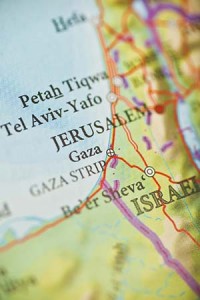
Photo credit: ThinkStock
In addition to these conflict-specific findings, the PCPSR study also finds increasing support for Hamas among Palestinians to levels not seen since 2006. If elections occurred today, current Hamas deputy political bureau chief Ismail Haniyeh would easily win a presidential race against current president Mahoud Abbas. This is a massive shift in public opinion. Tessler notes that before the most recent conflict, support for Hamas was fading. Shikaki attributes this gain to the conflict, while predicting the Hamas support may wane as time passes. Tessler likewise cautions, “If things do settle down for a reasonable period and there is a new and stable status quo, any spike in Hamas popularity will probably drift back toward its ‘normal’ level based on what people favor and perceive with respect to political Islam, compromise with Israel, corruption and other issues that drive Palestinian politics in normal times.” Thus, the lingering effects of the 2014 Israel-Gaza conflict will depend on whether or not the ceasefire continues.
Khalil Shikaki will give a talk at the CPS Interdisciplinary Workshop on Politics and Policy on September 17, 2014 in Room 6006 of the Institute for Social Research in Ann Arbor, Michigan.
Sep 4, 2014 | Innovative Methodology, International, Social Policy
Post developed by Katie Brown and Anne Pitcher.
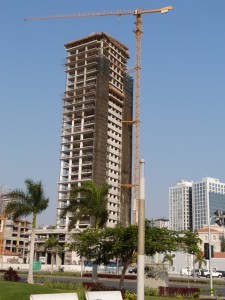
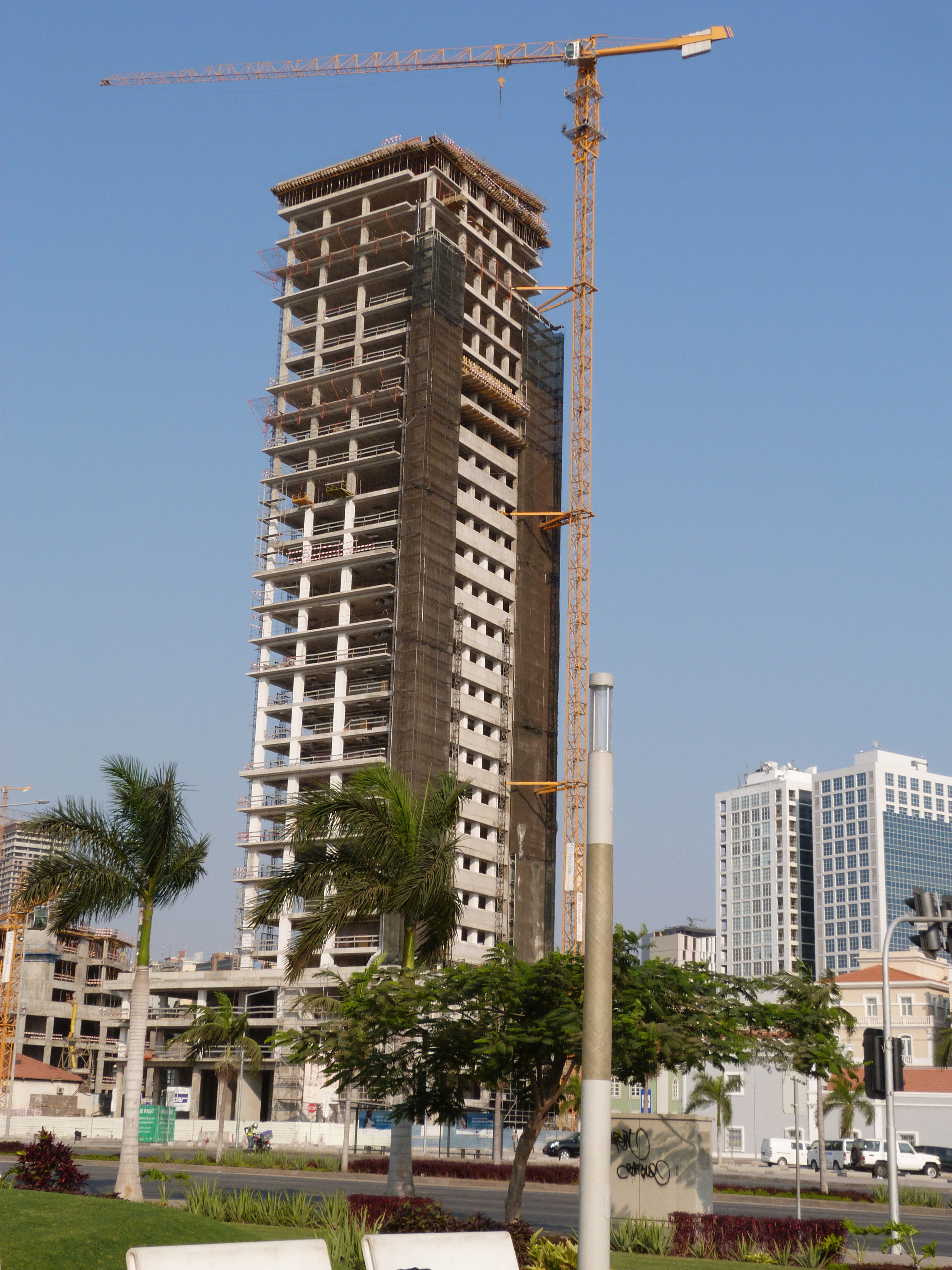
Housing construction in Angola’s capital of Luanda; Photo credit: Anne Pitcher
Research and news about Africa tend to focus on failed states, poverty, and corruption. While these themes ring true for some African countries, others have witnessed the expansion of urban areas, rising demand for consumer goods, and the growth of a middle class. Angola has “done it all.” Angola has experienced conflict but has now transitioned to peace. It has high rates of poverty but also has an emerging middle class.
Located in Southern Africa, with the Atlantic Ocean to the West, Democratic Republic of the Congo to the North, Zambia to the East, and Namibia to the South, Angola achieved independence from Portugal in 1975 only to become embroiled in a decades long civil war. Further, as an ally of Russia and Cuba, Angola remained isolated from the Western world for the duration of the Cold War.
Due to political instability and isolation, Angola’s nearly 20,000,000 citizens have been largely ignored in rigorous analysis. In fact, Angola is one of the least researched places in the world. Although there are several reputable research institutions based in Angola, most major surveys of the continent, like those conducted by the Afrobarometer, World Bank, or the African Development Bank, do not include Angola. Meanwhile, the results of the Angolan government’s own first census data will not be released for several more years.
Owing to her research experience in Mozambique, another African country formerly colonized by the Portuguese, Center for Political Studies (CPS) faculty associate Anne Pitcher decided to include Angola in her research beginning several years ago. Pitcher, also a Professor of African Studies and Political Science and Coordinator of the African Social Research Initiative, is interested in understanding patterns of goods distribution in Angola following the end of the civil war in 2002.
In particular, she wants to be able to explain why the government of this oil producing country had made a commitment to build a million homes for the urban poor and the middle class; how such an ambitious commitment is actually being realized in a country where revenues from oil completely dominate the Gross Domestic Product; and who is really benefiting from construction and sales in a place with a tightly knit elite and huge disparities in wealth.
To this end, Pitcher has teamed up with Angolan scholar Sylvia Croese and Allan Cain, the director of Development Workshop (a widely respected organization based in Luanda, Angola, and one of the few to attempt systematic studies of land, property rights, and patterns of urbanization in Angola). The researchers are currently conducting 200 tablet-based surveys of housing finance and satisfaction in Kilamba, a new city consisting of 20,000 units located on the outskirts of the capital city of Luanda. Financed by a 3.5 billion USD credit line from the Chinese government to the government of Angola, Kilamba is being built by the Chinese International Trust and Investment Corporation (CITIC) to house Angola’s growing middle class. Housing purchases are partly subsidized by the government and when fully occupied, Kilamba will house 150,000 people.
Conducting research in Angola has proven both easier and more difficult than expected. Pitcher anticipated that survey respondents might be reluctant to participate since Angola does not have a history of conducting public opinion surveys. Instead, she has found participants excited to voice their opinions. Pitcher attributes this eagerness to the limited avenues for self-expression in the relatively closed country. The survey’s timing has also tapped into the gradual opening of the society, as evidenced by support for the survey from the country’s Ministry of Urbanism and Housing. Yet the team has faced some obstacles. Building the participant pool has proven challenging, as the country lacks confirmed population data; exact occupancy rates in Kilamba are unknown; and there is very little existing background data from which to build hypotheses about how residents earn their incomes or finance purchases.
But so far, the survey team has persevered. Data collection ends this month, and the product will serve as some of the most comprehensive data of its sort ever collected in Angola (in addition to the still unreleased census). Beyond a number of questions drawn from Afrobarometer public opinion surveys conducted across the rest of Africa, the survey includes questions that have never been systematically asked about housing finance, satisfaction with housing, education, and commute times. It also measures public opinion on issues like the distribution of wealth, poverty, taxes, and unemployment.

A completed Kilamba housing development; Photo credit: Anne Pitcher
Pitcher believes that understanding real estate finance and the opinions of new middle class homeowners will offer valuable insights into the quickly evolving politics of the country. Why? The Popular Movement for the Liberation of Angola (MPLA) party has ruled the country since the nation’s independence in 1975. With the recent shift from a Marxist-Leninist one party system to multi-party politics, the MPLA wants to maintain power. Constructing houses is part of this effort. Among other models, the MPLA modeled this venture on Margaret Thatcher’s campaign to offer housing to Britain’s council residents in the 1980s. Thatcher hoped that providing housing would lead to more conservative and more loyal citizens. The MPLA may likewise hope that creating homeowners will create stability in a country marred by decades of war. Currently, many young people in Angola express great discontent, particularly with respect to a lack of housing. The study by Pitcher, Croese, and Cain will offer a better understanding of whether that discontent is being addressed or modified.
With data collection nearly complete, Pitcher is very excited to dive into the data. In the near future, the research team hopes to expand the scope of the survey to include additional types of urban housing such as social housing that is offered for free to those with minimal resources; self constructed housing built by individuals themselves; and cooperative private housing. Because the government is involved to varying degrees with each of these types, understanding the differences may not only shed light on politics and economics, but also offer insight on best practices with respect to housing finance and citizen satisfaction in developing, post-war countries.
Aug 31, 2014 | Conflict, Innovative Methodology, International
Post developed by Katie Brown and Christian Davenport.
ICYMI (In Case You Missed It), the following work was presented at the 2014 Annual Meeting of the American Political Science Association (APSA). The presentation, titled “The Domestic and/or International Determinants of State Repression: Examining Spells,” was a part of the Conflict Processes panel “Determinants of State Repression” on Sunday August 31st, 2014.
Since the Holocaust, one of the most important purported tasks of humankind has been to never again let such horrific violations of human rights occur. This mission came with a three-part strategy of preventing, stopping, and prosecuting such violations.
And yet, again and again, grave human rights violations continue to happen: Guatemala, Tibet, Rwanda, and Syria are just a few examples. Christian Davenport, Faculty Associate in the Center for Political Studies (CPS) and Professor of Political Science, along with Benjamin J. Appel of Michigan State University, have examined 220 instances of extreme state repression in recent decades.
The first analysis of its kind and part of a series which will ultimately be published in a book, the 220 examples included in the database occurred between 1976 and 2004. Each scored above a 3 on the Political Terror Scale. Level 3 is characterized by political imprisonment, including executions, no trials, indefinite sentences, and brutality. This escalates to level 4 when civil and political rights violations extend to most of the population and “murders, disappearances, and torture are a common part of life.” The scale maxes out at 5, at which point the entire population is affected by brutality, as the leader will stop at nothing to achieve ideological goals.
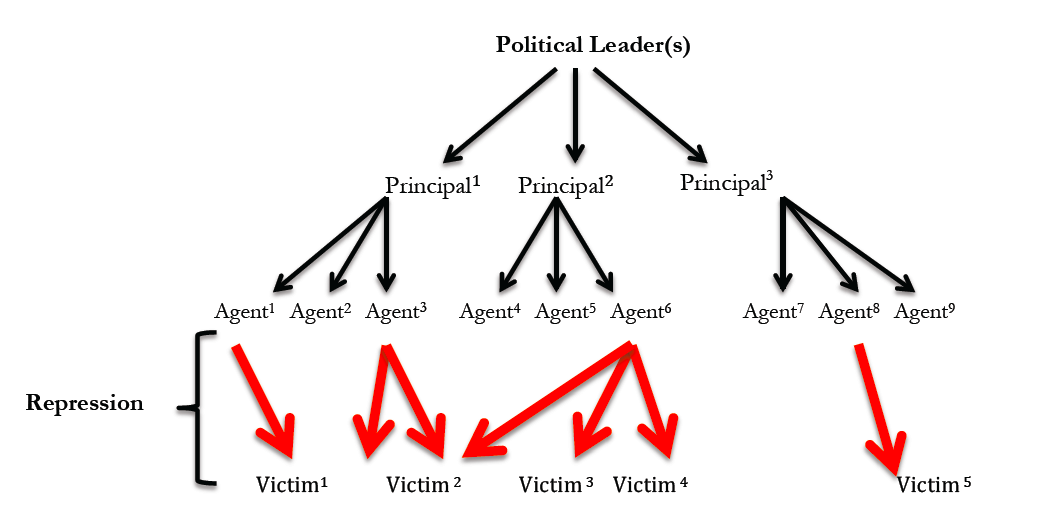
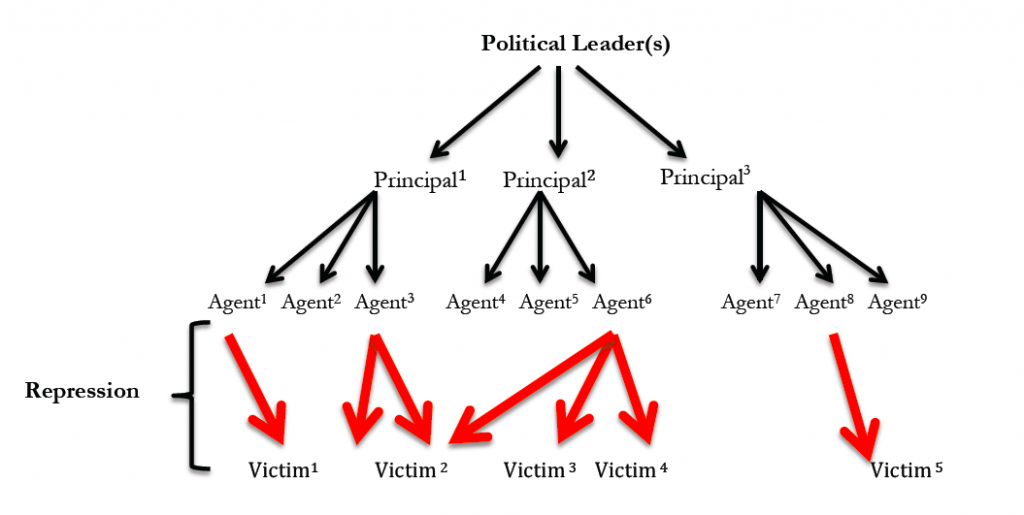
The authors clarify that, while it is the leader’s goals enacted, they do not do their own dirty work. Rather, this role is allocated to principals (e.g., generals), who in turn give the orders and necessary resources to agents (e.g., soldiers and police officers). These agents enact the brutality on victims. The flow chart below delineates this process.
Assigning the Dirty Work of State Repression
The authors’ goal in analyzing the 220 cases of state repression: understand what stops the repression. Davenport and Appel look at both domestic and international factors. International approaches include economic sanctions, military action, public condemnation, and Preferential Trade Agreements designed to make it harder for the repressive government to obtain the means of repression. Increasing democracy within the borders constitutes the domestic answer to repression.
After analyzing the 220 cases, the authors find essentially no support for the international efforts to stop repression, though Preferential Trade Agreements do exhibit an influence. The more powerful and appropriate approach, however, concerns democratization from within. The authors conclude, “If one is trying to stop state repression, then they should consider how best to move the government toward full democracy.” But, the authors caution that they best way to stop state repression is to prevent it in the first place.
Aug 30, 2014 | Current Events, Foreign Affairs, Innovative Methodology, International, Law
Post developed by Katie Brown and Muzammil M. Hussain.
ICYMI (In Case You Missed It), the following work was presented at the 2014 Annual Meeting of the American Political Science Association (APSA). The presentation, titled “Post-Arab Spring Formations of the Internet Freedom Regime,” was a part of the Political Communication panel “From the Middle East to the Million Man March: The Continuing Digital Revolution” on Saturday August 30th, 2014.

Photo credit: ThinkStock
In early 2011 through 2012, unexpected uprisings cascaded throughout the Arab World. News of this Arab Spring swept across the globe, which inspired several other cascades of political change. Communication systems, especially social media networks, offered an immediate and intimate glimpse into these movements, their successes and failures. So how have state powers and political activists responded to the political capacities of this shared and global digital infrastructure?
Communication Studies Assistant Professor and Center for Political Studies (CPS) Faculty Associate Muzammil M. Hussain studies the political economy of Internet freedom activism. In particular, he is interested in the fate of digital infrastructure in “born digital” states, or states which had successful regime changes that were enabled by digital media. The Arab Spring presents a fascinating and recent moment to consider these “born digital” states. Hussain asks what role governments – both the challenged authoritarian states and the emerging democracies – are playing in shaping communication networks. To address this, he focuses on the transnational activities of political activists promoting Internet freedom.
Hussain conducted fieldwork in the Middle East, North Africa, Western Europe, and North America between 2012-2013, after the Arab Spring protests subsided and a new kind of policy activism took root. Through this international network ethnography of policy makers, communications corporations, and political activists involved in the Arab Spring, Hussain collected a massive array of data. The data includes both interviews and participant-observation, with corroborative evidence of 5,000 individuals and their 84,000 social ties, as well as over 2,000 emails generated through their lobbying and activism work.
This meta-database encompasses the three main stakeholders in Internet freedom promotion: state powers, technology providers, and civil society actors. Hussain argues that Western democracies have been important and successful in launching several major initiatives for securing internet freedom and supporting digital activists currently working within repressive political systems. But these efforts to establish an Internet freedom policy regime are currently gridlocked in competing “communities of practice.”
On the one hand, the community of state-based stakeholders have come to narrowly regard digital media as a critical infrastructure, overvalued its significance as an economic interest and undervalued its significance to democratic activists. On the other hand, since the Arab Spring, the community of tech-savvy political activists has moved rapidly into many new communications policy arenas. Finally, revelations of warrantless surveillance by several advanced democracies have also threatened the viability of this Internet freedom regime. So what are democratic activists and Internet freedom promoters left to do? Stay tuned for Hussain’s next book project: Securing Technologies of Freedom: Internet Freedom Promotion after the Arab Spring.