How much does partisanship explain how legislative districts are drawn? Legislators commonly agree on neutral criteria for drawing district lines, but the extent to which partisan considerations overshadow these neutral criteria is often the subject of intense controversy.
Jowei Chen developed a new way to analyze legislative districts and determine whether they have been unfairly gerrymandered for partisan reasons. Chen, an Associate Professor of Political Science and a Research Associate at the Center for Political Studies, used computer simulations to produce thousands of non-partisan districting plans that follow traditional districting criteria.
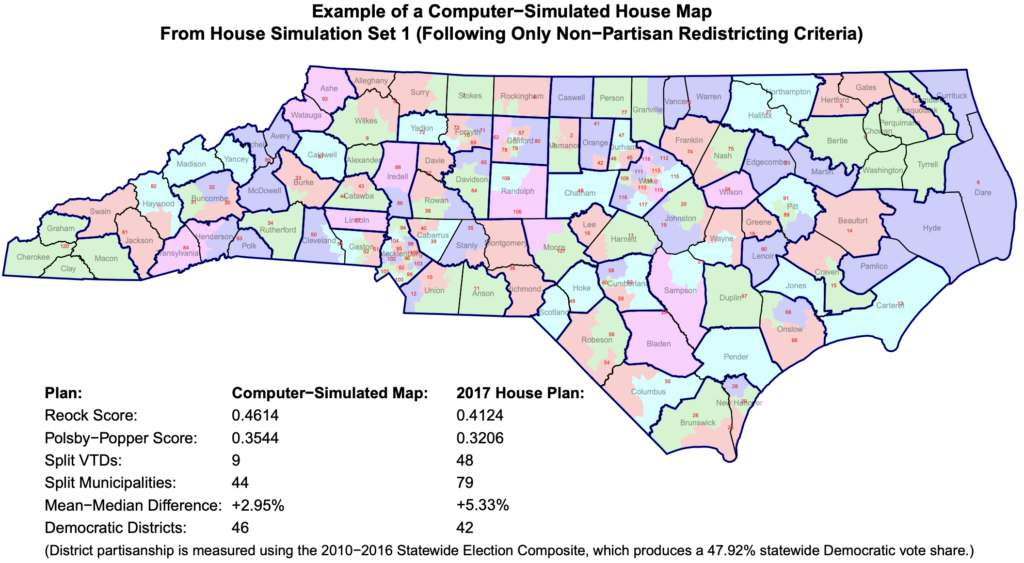
These simulated district maps formed the basis of Chen’s recent expert court testimony in Common Cause v. Lewis, a case in which plaintiffs argued that North Carolina state legislative district maps drawn in 2017 were unconstitutionally gerrymandered. By comparing the non-partisan simulated maps to the existing districts, Chen was able to show that the 2017 districts “cannot be explained by North Carolina’s political geography.”
The simulated maps ignored all partisan and racial considerations. North Carolina’s General Assembly adopted several traditional districting criteria for drawing districts, and Chen’s simulations followed only these neutral criteria, including: equalizing population, maximizing geographic compactness, and preserving political subdivisions such as county, municipal, and precinct boundaries. By holding constant all of these traditional redistricting criteria, Chen determined that the 2017 district maps could not be explained by factors other than the intentional pursuit of partisan advantage.
Specifically, when compared to the simulated maps, Chen found that the 2017 districts split far more precincts and municipalities than was reasonably necessary, and were significantly less geographically compact than the simulations.
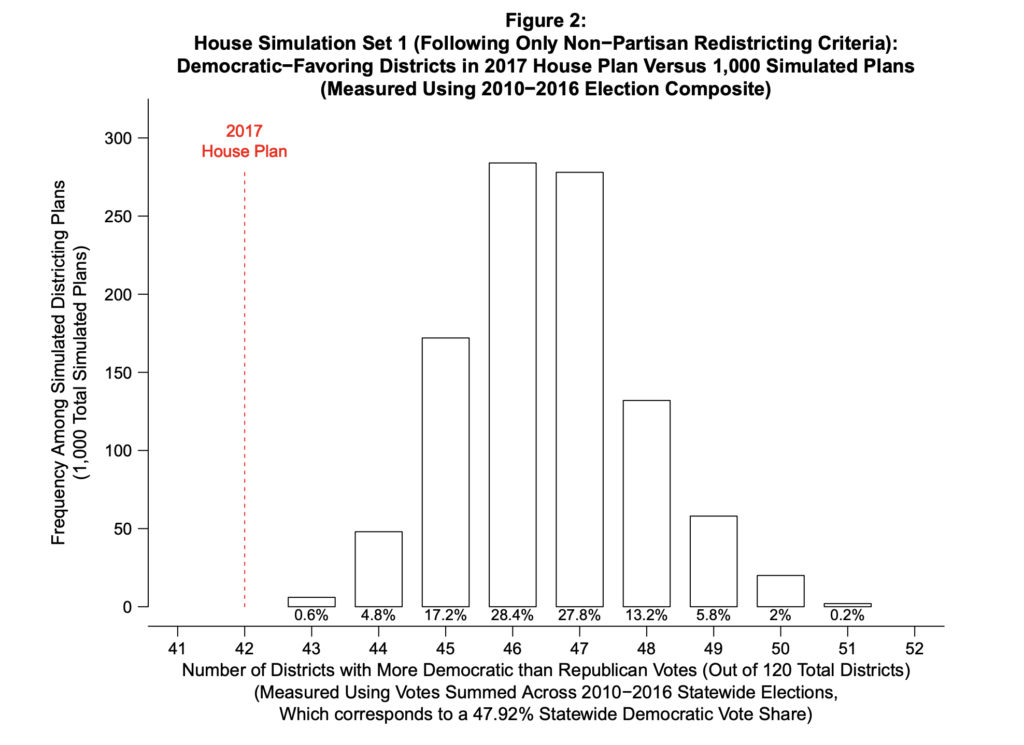
By disregarding these traditional standards, the 2017 House Plan was able to create 78 Republican-leaning districts out of 120 total; the Senate Plan created 32 Republican-leaning districts out of 50.
Using data from 10 recent elections in North Carolina, Chen compared the partisan leanings of the simulated districts to the actual ones. Every one of the simulated maps based on traditional criteria created fewer Republican-leaning districts. In fact, the 2017 House and Senate plans were extreme statistical outliers, demonstrating that partisanship predominated over the traditional criteria in those plans.
Determining whether legislative maps are fair will be an ongoing process involving courts and voters across different states. But in recent years, the simulation techniques developed by Chen have been repeatedly cited and relied upon by state and federal courts in Pennsylvania, Michigan, and elsewhere as a more scientific method for measuring how much districting maps are gerrymandered for partisan gain.
A new election forensics process developed by Walter Mebane and Alejandro Pineda uses machine-learning to examine not just text, but images, too, for Twitter posts that are considered reports of “incidents” from the 2016 US Presidential Election.
Mebane and Pineda show how to combine text and images into a single supervised learner for prediction in US politics using a multi-layer perceptron. The paper notes that in election forensics, polls are useful, but social media data may offer more extensive and granular coverage.
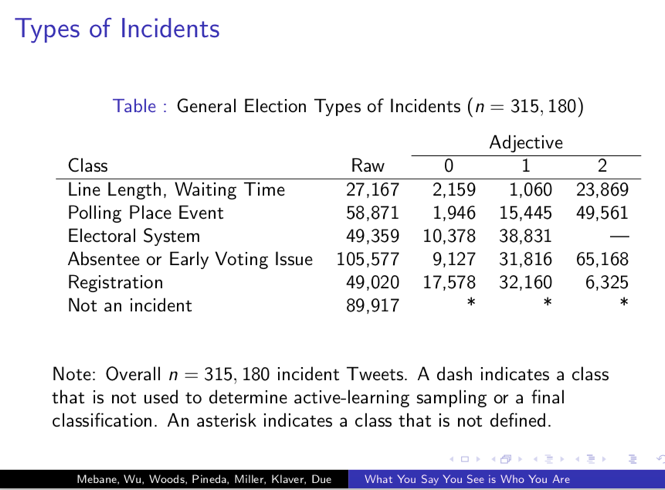
The research team gathered individual observation data from Twitter in the months leading up to the 2016 US Presidential Election. Between Oct. 1-Nov. 8, 2016, the team used Twitter APIs to collect millions of tweets, arriving at more than 315,180 tweets that apparently reported one or more election “incidents” – an individual’s report of their personal experience with some aspect of the election process.
At first, the research team used only text associated with tweets. But the researchers note that sometimes, images in a tweet are informative, while the text is not. It’s possible for the text alone to not make a tweet a report of an election incident, while the image may indeed show an incident.
To solve this problem, the research team implemented some “deep neural network classifier methods that use both text and images associated with tweets. The network is constructed such that its text-focused parts learn from the image inputs, and its image-focused parts learn from the text inputs. Using such a dual-mode classifier ought to improve performance. In principle our architecture should improve performance classifying tweets that do not include images as well as tweets that do,” they wrote.
“Automating analysis for digital content proves difficult because the form of data takes so many different shapes. This paper offers a solution: a method for the automated classification of multi-modal content.” The research team’s model “takes image and text as input and outputs a single classification decision for each tweet – two inputs, one output.”
The paper describes in detail how the research team processed and analyzed tweet-images, which included loading image files in batches, restricting image types to .jpeg or .png., and using small image sizes for better data processing results.
The results were mixed.
The researchers trained two models using a sample of 1,278 tweets. One model combined text and images, the other focused only on text. In the text-only model, accuracy steadily increases until it achieves top accuracy at 99%. “Such high performance is testimony to the power of transfer learning,” the authors wrote.
However, the team was surprised that including the images substantially worsened performance. “Our proof-of-concept combined classifier works. But the model structure and hyperparameter details need to be adjusted to enhance performance. And it’s time to mobilize hardware superior to what we’ve used for this paper. New issues will arise as we do that.”
Classifying systems of government is a challenge for political scientists comparing regimes over time and across countries. A new historical dataset developed by Fabricio Vasselai, Samuel Baltz, and Allen Hicken addresses this challenge with a simplified classification scheme that presents data on four broad variables: whether there is an elected prime minister, whether there is an elected president, whether there is a non-elected prime minister, and whether there is a non-elected president. The dataset includes a yearly assessment for almost all sovereign countries since 1789, which amounts to 16,910 country-years.
The simplicity of this classification system allows researchers to examine other characteristics separately, including the level of democracy or the powers of elected leaders. While the majority of country-years fit a neat definition, this dataset allows a clearer analysis of complex cases.
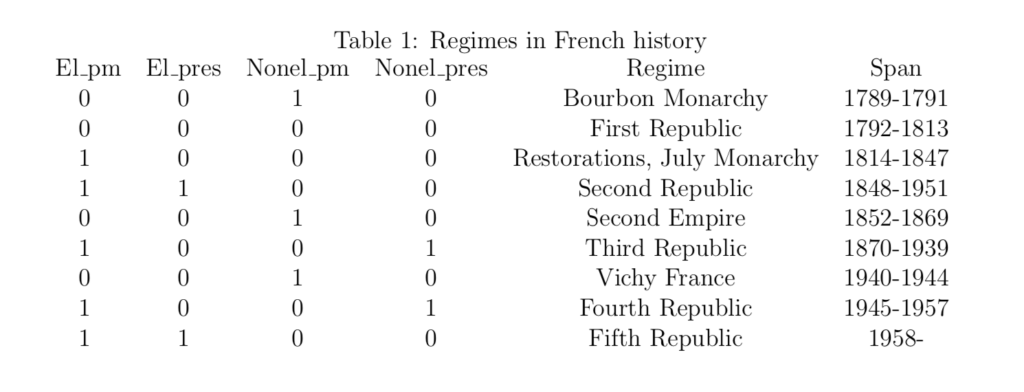
The authors present France as an interesting test case. In the years included in this dataset, France had (1) only an unelected prime minister, (2) no elected or unelected prime minister or president, (3) only an elected prime minister, (4) an elected prime minister and an elected president, or (5) an elected prime minister and unelected president, with several of these states repeating multiple times throughout France’s history. The dataset presents this complicated historical narrative in the simplified manner below.
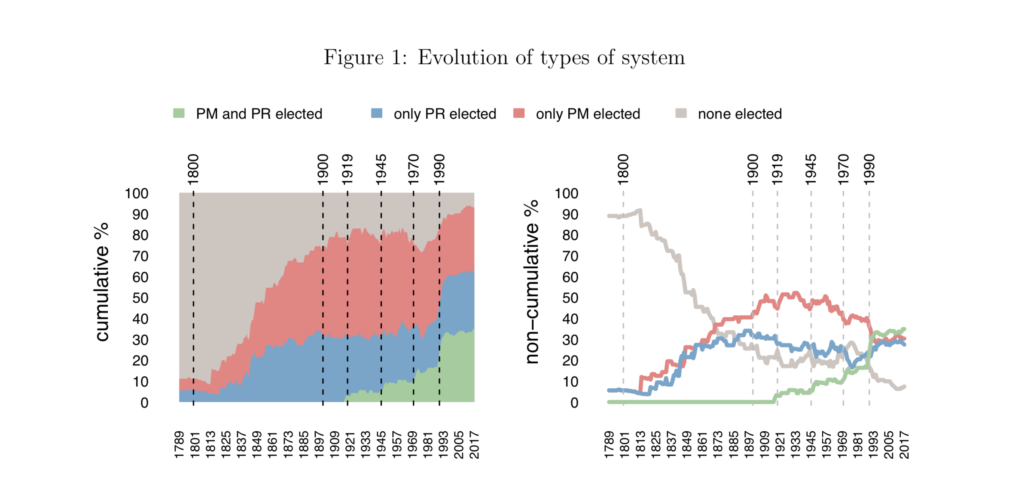
This classification system also allows researchers to explore the evolution of different systems of government over longer periods of time. The authors show that an explosion of elections took place in the 19th century. Beginning in the 20th century, the share of countries electing only a prime minister takes a slight lead; by 1945 almost twice as many countries elected only a prime minister compared to those electing only a president. The share of countries electing either leader climbs through the second half of the 20th century, with only about 10 percent of country-years lacking an elected leader by 2017.
By developing a simple, comprehensive dataset, Vasselai, Baltz, and Hicken have given researchers a resource that allows them to analyze regimes consistently and layer on additional information as needed.
As a country grows and develops economically, most experts expect political behavior to develop as well, becoming more policy-oriented and programmatic and moving away from clientelism that characterizes less developed countries. However, this has not been the case in Ghana. In his new book, Electoral Politics and Africa’s Urban Transition, Noah Nathan traces the unexpected political patterns that are emerging in urban Ghana. Despite a growing middle class and increasing ethnic diversity, clientelism and ethnic voting persist in many urban neighborhoods.
Nathan focuses his research on Accra, Ghana, a diverse and growing metropolis of four million people. Not only is the population of the city growing, but it is becoming wealthier and better educated: data show that the middle class in Accra has tripled in size since Ghana democratized in 1992. The trend toward urbanization has also led to more diversity and contact between members of different ethnic groups in the city. Experts usually expect that higher incomes and levels of education will shift voter preferences away from politicians offering patronage and toward more policy-oriented candidates.
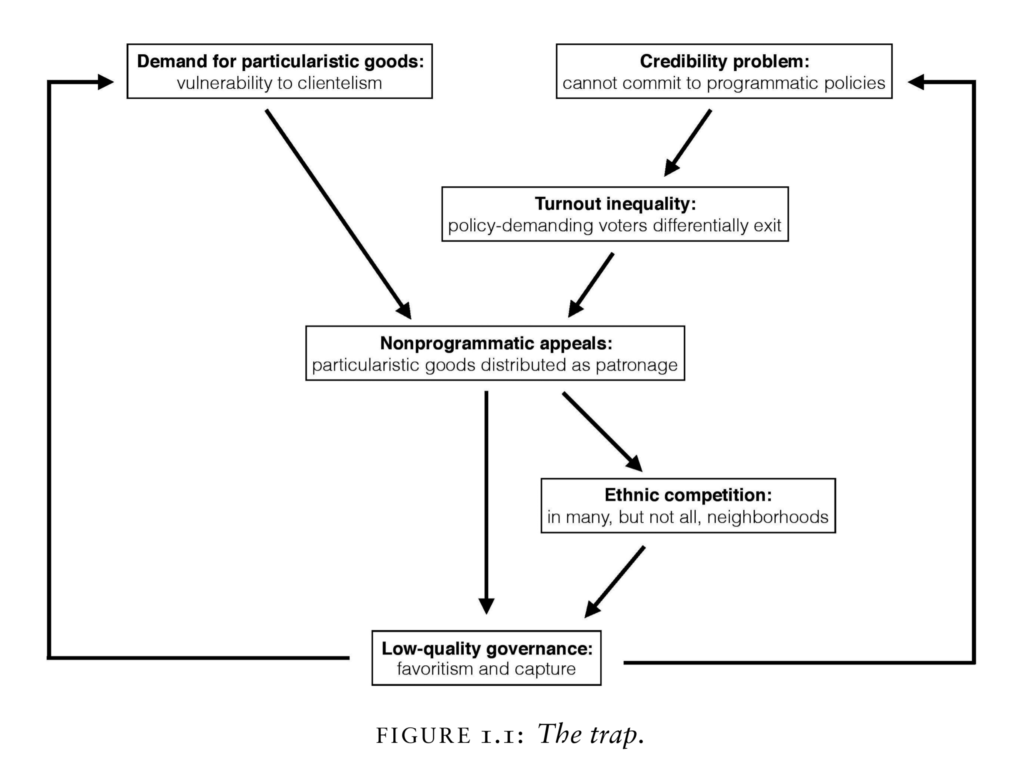
Political practices in Ghana have not transitioned as rapidly as the demographics have. Instead, Nathan shows, Ghanaian politics have become stuck in a trap. The trap is a cycle wherein voters expect goods and favors, which politicians deliver in the form of patronage. As a result, the government performs poorly and elected officials are seen as less credible. Policy-oriented citizens are left without programmatic candidates, and become more likely to decide to opt out of voting entirely. With those voters increasingly out of play, politicians face strong incentives to continue engaging in clientelism, sometimes creating ethnic competition.
Nathan, Noah L. Electoral Politics and Africa’s Urban Transition: Class and Ethnicity in Ghana. Cambridge University Press, 2019.
The key to understanding the political trap of clientelism is the neighborhood-level variations within cities. Voters with similar levels of wealth and education do not all vote alike across the city; voting behaviors differ greatly by neighborhood. Voters in poorer neighborhoods still expect favors from politicians, who respond accordingly. Taking this into account, many middle-class voters, those who are most likely to support a programmatic transition, opt out of voting because they view politicians engaging in patronage as lacking credibility.
Certain features of developing cities give further context to explain politicians’ and voters’ incentives. Developing countries have lower capacity to provide services and infrastructure to their citizens as a whole. The rapid pace of growth creates a scarcity of resources to go around. Without the credibility to promise broad improvements, politicians rely instead on promises to select groups. Cities tend to be comprised of neighborhoods that differ widely in their wealth and diversity, often within the same electoral district. Understanding these realities help explain why clientelism prevails, even as the electorate becomes wealthier, better-educated, and more diverse.
Nathan concludes his analysis of the political patterns in Ghana by drawing parallels with political systems seen in the United States in the late 19th and early 20th century, as well as in Latin American cities. In these cases the shift to more programmatic politics occurred politicians could no longer distribute government resources selectively. The rise of civil service reforms and broad social welfare programs supported the shift to policy-oriented systems. These parallels to similar transitions over time and in other developing countries may point the way to more policy-oriented political systems in the future.
Elections experts Ken Goldstein, Walter Mebane, and Vincent Hutchings analyzed the results and key lessons of the 2018 Midterm Elections at a round table discussion hosted by the Center for Political Studies on November 13, 2018. A recording of the event is available below.
Ken Goldstein, Professor of Politics at the University of San Francisco
Ken Goldstein began his presentation by noting that there are still races that do not have a clear winner a week after the election, including the Senate and Governor’s races in Florida and the Governor’s race in Georgia.
Leading up to the Midterm Elections, some observers anticipated big wins for the Democratic Party. Goldstein observed that while there was a general lack of exuberance on the part of Democrats on election night, further reflection reveals that there were meaningful shifts in this election. Although the “blue wave” of Democratic wins didn’t materialize, the number of congressional seats changing away from the President’s party was of similar magnitude to past midterm elections.
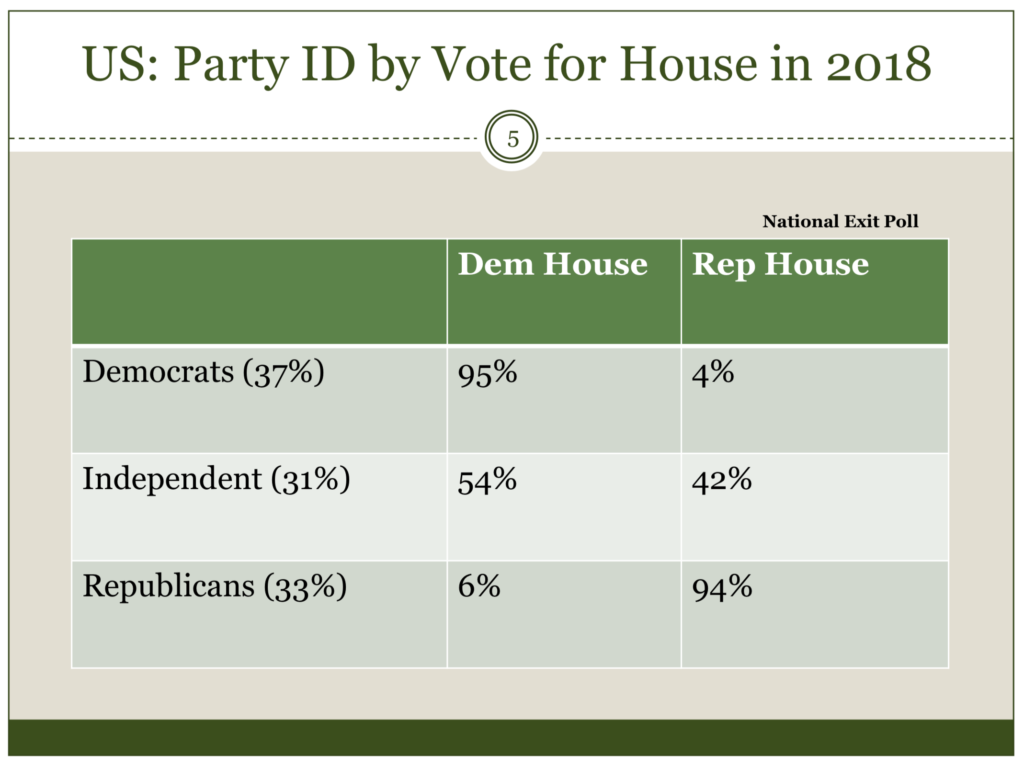
Goldstein drew attention to the behavior of independent voters. Exit poll data show that independents favored Republican candidates for the House of Representatives in the past two midterm elections, as well as the 2016 General Election. In contrast, independent voters were more likely to vote for Democratic House candidates in 2018 by a margin of 12 percentage points.
Were the polls leading up to the election predictive of the actual outcome? Goldstein said they were fairly accurate, but reminded the audience that many congressional seats were not in play in this election. There are few high-quality state-level polls, which makes forecasting less accurate. More probability-based surveys that weight responses for education and race of the respondent would improve the accuracy of predictions.
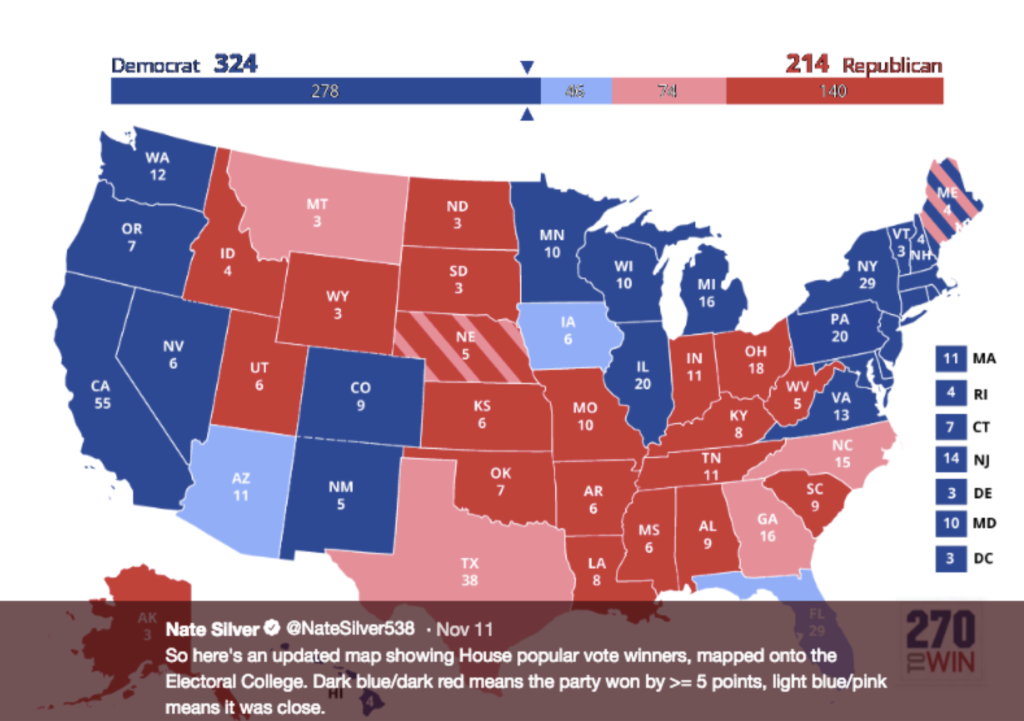
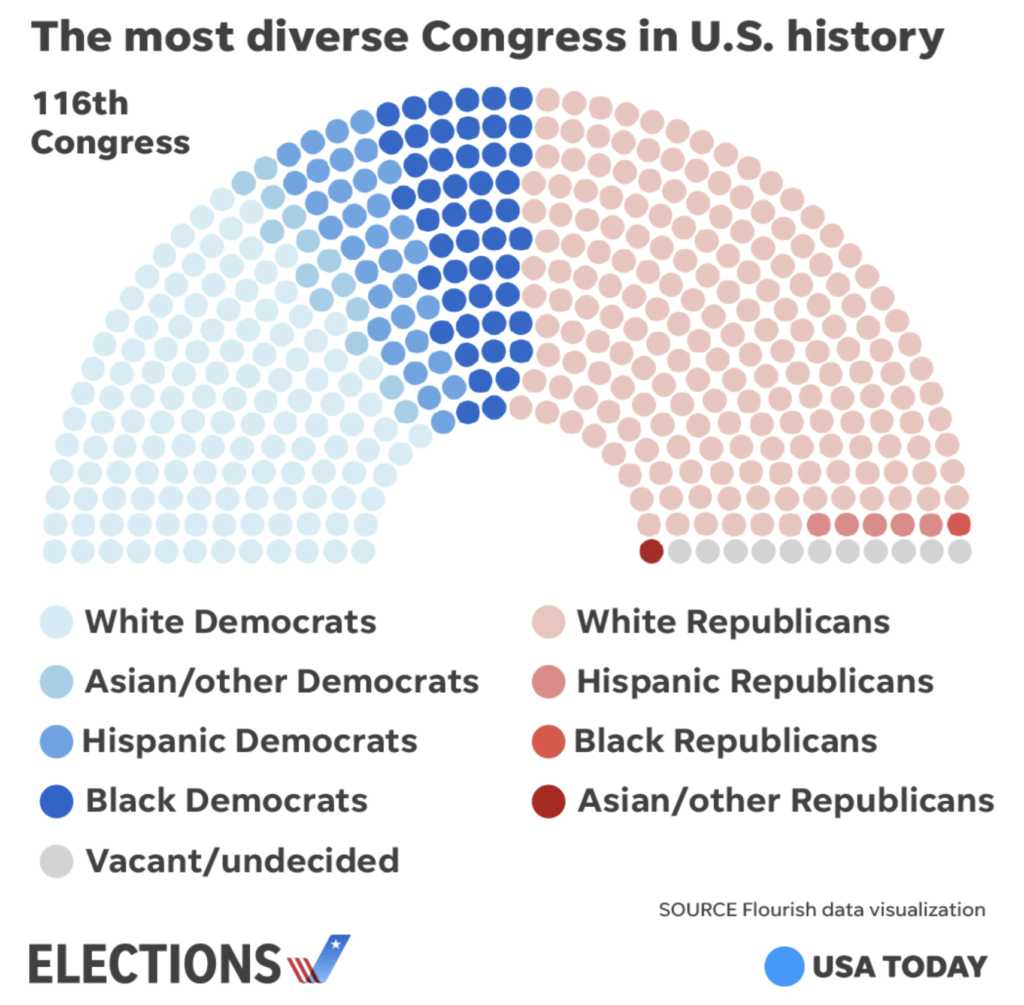
Looking at the big picture trends, Goldstein observed that there was a substantial increase in the number of women running for office and winning, as well as large increases in non-white voters. He shared a map showing what the results of the presidential election would look if votes followed the same partisan break-down as the 2018 midterms. However, Goldstein cautioned that presidential campaigns are very different from congressional campaigns, and that a presidential candidate running a nation-wide campaign will face challenges in changing districts, especially in the Midwest.
Walter Mebane, Professor of Political Science and Statistics at the University of Michigan
Next, Walter Mebane presented analyses he has conducted using election forensics. Mebane coined the term “election forensics” to describe a set of statistical methods he developed to determine whether the results of an election accurately reflect the intentions of the electors.
Using Twitter data from the 2016 General Election Mebane analyzed reports of election incidents, including wait times and problems with voting. During the 2016 General Election people used Twitter to report different kinds of election incidents depending on their partisan affiliation. These incidents tended to be reported in replies to people with similar partisan affiliations.
Mebane discovered that there are partisan differences in the types of incidents that Twitter users shared during the 2016 General Election. For example, Republicans were less likely to report a long line to vote, but more likely to report registration problems. A significant conclusion from this finding is that such observational biases and communication silos suggest partisans tended to form different impressions of how the 2016 election went, supported by the divergent reported experiences. These patterns will probably continue in 2018, according to Mebane.
Vincent Hutchings, Professor of Political Science at the University of Michigan
Vincent Hutchings analyzed the shifting demographics of the American electorate. Hutchings presented data showing that Democratic voters have become more racially diverse in the past 20 years, while Republican voters have remained predominately white. Similarly, the Congress elected in 2018 is the most diverse in the history of the United States, but the increase in diversity has been primarily among Democrats elected to Congress.
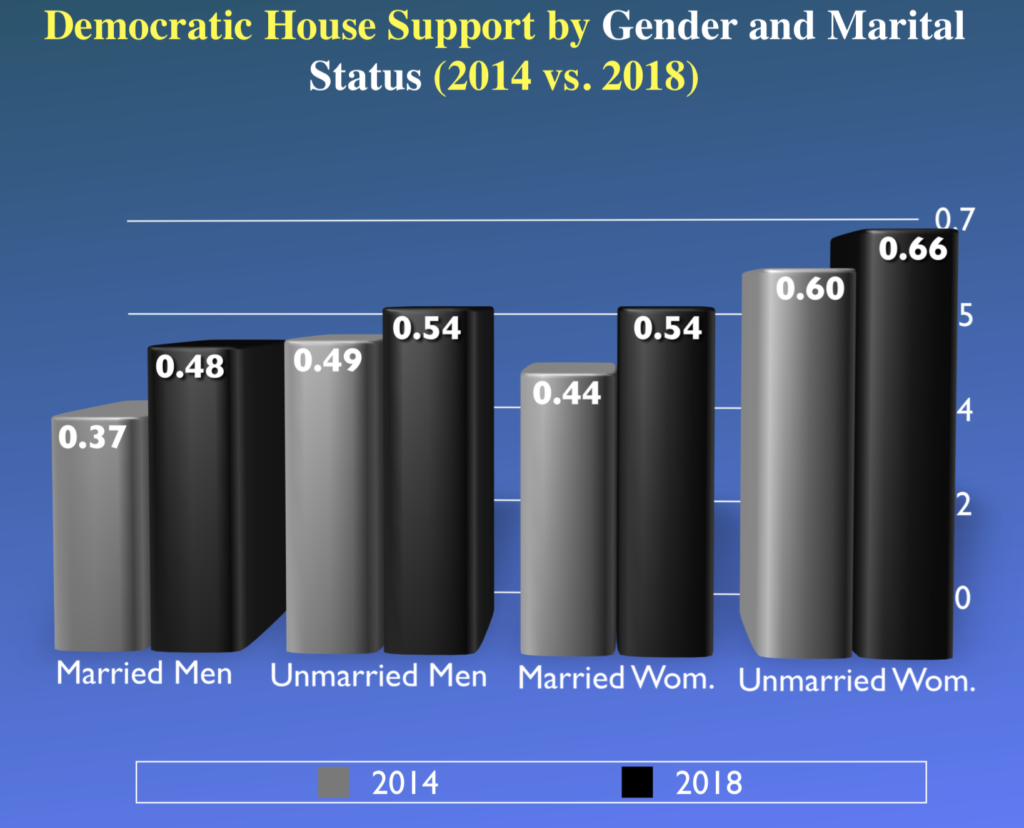
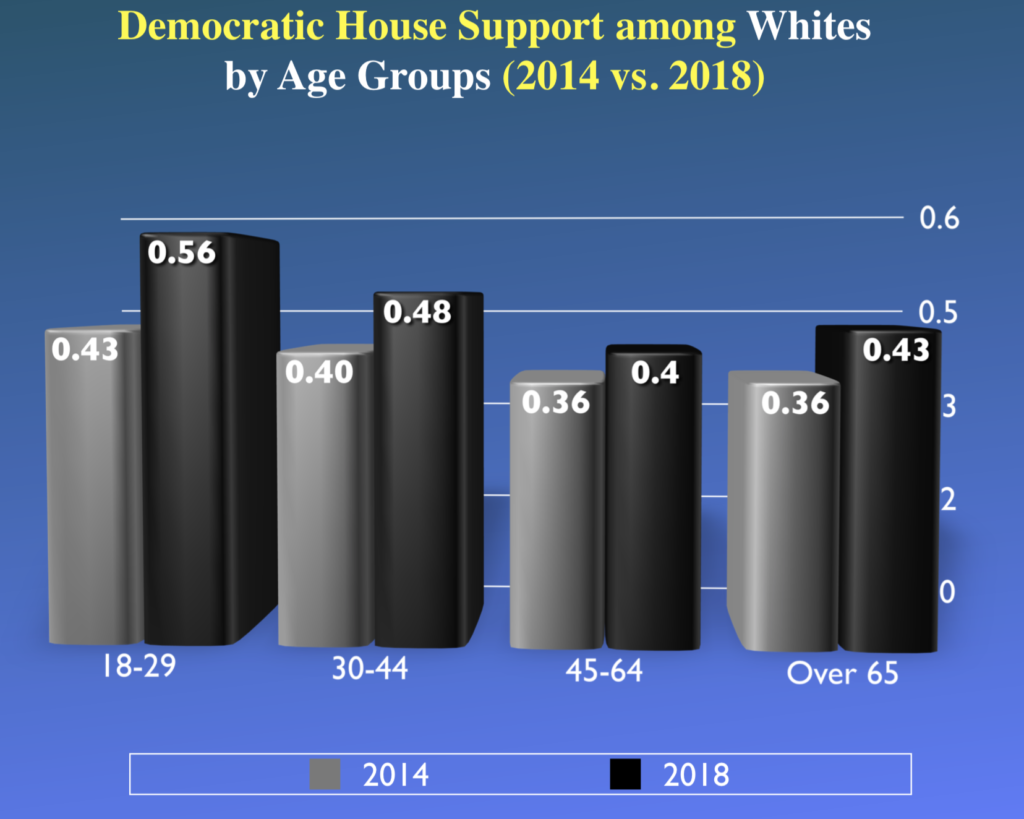
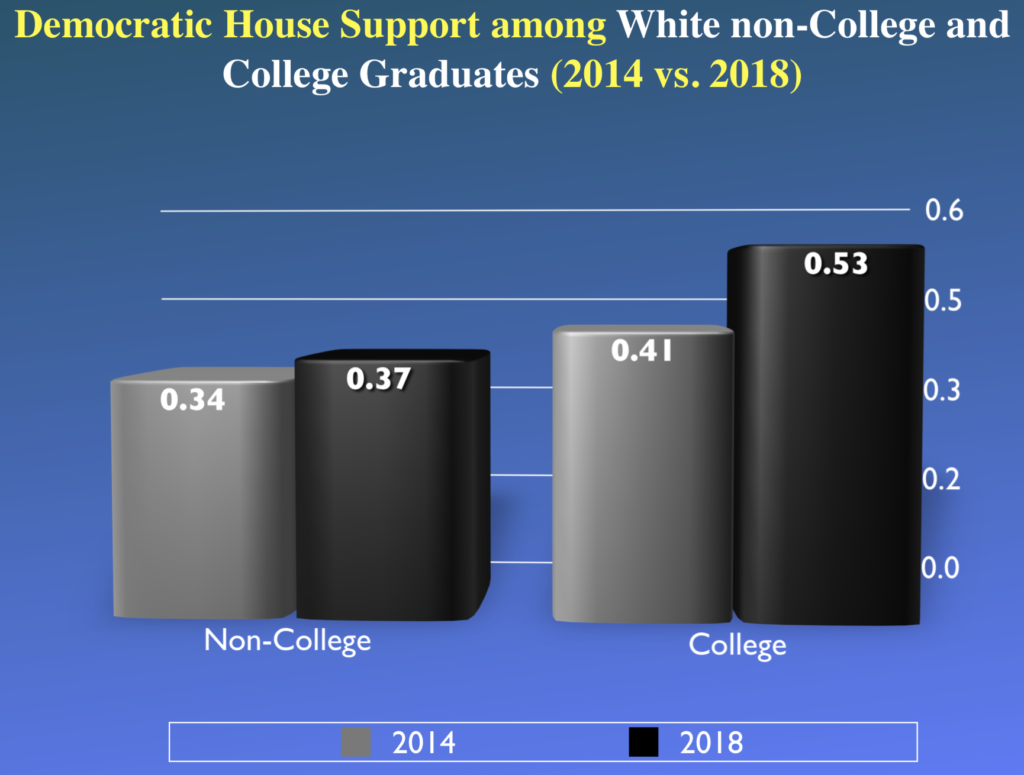
Reviewing voting data by race, gender, age, marital status, and education, Hutchings notes that each demographic group voted for Democrats at a higher rate than they did in the 2014 Midterm Elections. However, the magnitude of change was different for each group.
Some elections experts wondered whether women would vote for Democrats at higher rates in 2018 in response to the #MeToo movement, the contentious confirmation of Justice Kavanaugh, and controversial remarks about women made by President Trump. Hutchings showed that, among white voters, men and women both shifted toward Democratic candidates, but the gender gap didn’t change. Married men and married women both moved toward the Democratic Party House candidates at roughly equal rates in 2018 compared to 2014. No matter how Hutchings examined gender, he found no evidence that white women behaved differently than comparable men, relative to their preferences four years ago.
Similarly, Hutchings observed meaningful trends related to generation and education. Voters under 30 years old voted for Democrats at a higher rate than voters under 30 in 2014. Democrats also increased gains among college-educated white voters compared to the 2014 Midterm Elections. Hutchings concluded that, while media may focus on gender differences between Democratic and Republican voters, more important differences are emerging along generational and educational lines, and these are trends to watch
By Nicholas Valentino, James Newburg and Fabian Neuner
ICYMI (In Case You Missed It), the following work was presented at the 2018 Annual Meeting of the American Political Science Association (APSA). The presentation, titled “Dog Whistles to Bullhorns: Racial Rhetoric in Presidential Campaigns, 1984-2016” was a part of the session “Framing Politics: The Importance of Tone and Racial Rhetoric for Framing Effects” on Friday, August 31, 2018.
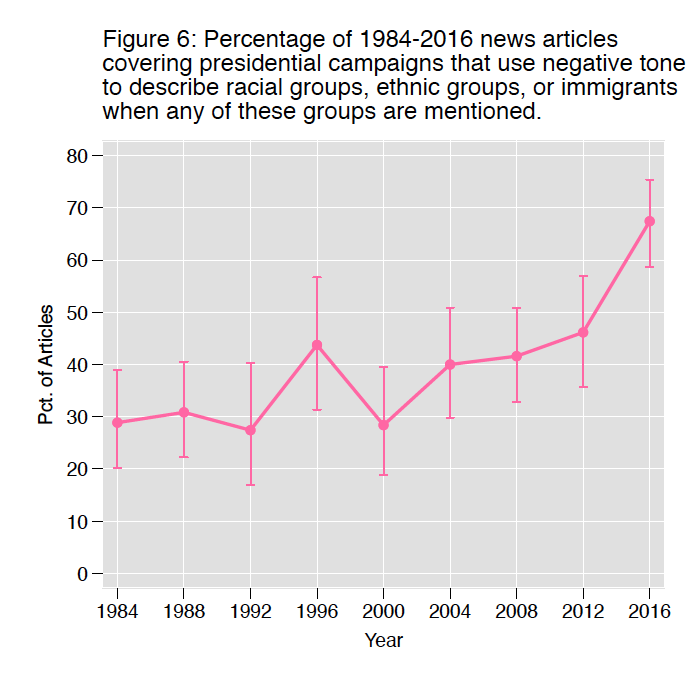
Political candidates’ use of coded language to express controversial attitudes on race is nothing new – but is it more common than in the past? Nicholas Valentino, James Newburg, and Fabian Neuner analyzed data from 1984 to the present that showed campaign rhetoric in 2016 included more racial rhetoric, negative racial group outreach, and negative mentions of racial groups than any other campaign they studied.
Beginning in 1968 through the late 1990s, the expression of explicitly racist attitudes seemed to be in decline, although racially charged imagery was still used in the news and media. While the rhetoric became subtler, prejudicial attitudes were still expressed through “racially coded” language. Over time, issues like crime, welfare, and immigration evoked negative racial stereotypes that could impact political choices without explicitly mentioning race.
The shift to less directly rhetoric is important because implicit references to race and racial stereotypes may have a greater impact on perceptions than explicit ones do. The authors of this study note that previous research shows that people may dismiss obvious appeals to racial bias, while actually being influenced by more subtle or coded language. They note that the strength of this effect is uncertain, and that recent studies show respondents more likely to accept explicit racial rhetoric.
After Barack Obama’s election in 2008, racially charged discourse became more explicit, shocking some Americans. It was impossible not to notice the change in the tone of racial language in the election of 2016. But when exactly did this shift occur? Did it happen gradually or all at once?
To answer these questions, the authors examine trends in racial rhetoric reported in the news between 1984 and 2016. They set out a hypothesis: If changes in rhetoric happened more gradually over time as a result of partisan realignment, they should see trends in the use of explicit racial rhetoric that predate the 2016 campaign, and perhaps even prior to 2008. If, on the other hand, the 2016 election and the candidacy of Donald Trump is the major cause of shifts in discussions of race and ethnicity in mainstream American politics, they would expect explicit group mentions, especially hostile ones, to spike in 2016.
The researchers conducted a rigorous analysis of thousands of articles published in the New York Times and Washington Post between September 1 and Election Day during every presidential election year from 1984 to 2016. They found that while mentions of race were high throughout the study period, racial rhetoric spiked in 2016, especially with regard to immigrants and immigration.
Significant moments of presidential campaigns track with the rise and fall of explicit mentions of race in the news. As Republicans made electoral gains among Southern Whites, racial language reached a peak; during the more moderate campaigns of Bill Clinton and George W. Bush, racial language declined. Race became more prominent with the historic election of Barack Obama in 2008, but declined when Obama avoided discussions of race during his reelection campaign. The authors find that 2016 was unique in the high number of explicitly negative racial statements, but that partisan realignment had been causing this change had also been driving up the acceptability of these types of messages over several years.
They found that while the total amount of group coverage did not rise sharply until 2016, the coverage that was dedicated to groups got more negative gradually over time. Notably, an important factor in the secular increase of racial rhetoric was negative language describing Arab Americans, Latinos, and Immigrants in recent years. As American demographics continue to change and non-white groups grow in numbers and political strength, these trends in political language will grow even more significant.