Feb 6, 2014 | Foreign Affairs, International
Post developed by Katie Brown and Yuen Yuen Ang.

Photo credit: Thinkstock
What hobbles online activism in autocracies? The intuitive answer: repression. In a recent article titled “Authoritarian Restraints on Online Activism Revisited: Why ‘I-Paid-A-Bribe’ Worked in India but Failed in China” in Comparative Politics, Center for Political Studies (CPS) faculty associate, assistant professor of political science, and Center for Chinese Studies faculty associate Yuen Yuen Ang looks beyond repression — she brings attention to the deeper organizational problems rooted in authoritarian rule.
In 2008, social activists in India created www.ipaidabribe.com (IPAB), a crowd-sourcing website that collects anonymous reports of bribe extraction. By 2014, more than three million users visited India’s IPAB site, with over 20,000 bribe reports filed. Major news outlets covered IPAB. And IPAB soon spread to 17 other countries, including China in 2011.
But, whereas IPAB flourished in India, within two months, all of China’s IPAB sites disappeared. Why?
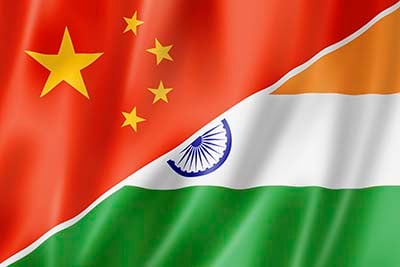
Photo credit: Thinkstock
Given that China is an authoritarian state, the assumption is that censorship and repression killed the sites. As asserted in the New York Times:
“They [IPAB sites] are threatening enough that when a rash of similar sites popped up in China last summer, the government stamped them out within a couple of weeks.”
Ang’s research, however, finds a more nuanced and complex story. Chinese authorities did not in fact stamp out the sites resolutely, but instead wavered between approval and suppression. More importantly, even before the final shut-down, the IPAB sites had already begun to crack from internal organizational problems. Chinese netizens used the sites to vent, exact personal revenge, and even extract profit and bribes from posting reports.
These problems are rooted in prolonged restrictions that deprive China’s civil society the opportunity to learn the norms of constructive participation and to professionalize. Anonymity on the Internet exacerbates the challenges of self-governance.
Thus, Ang cautions against sanguine views about the revolutionary power of online activism in checking corruption and authoritarian power. The challenge of civic empowerment runs deeper than escaping the shackles of repression. As she concludes,
“Authoritarian rule provides an inhospitable environment for nurturing online citizenship in the full sense of the word, involving not only the exercise of rights and free speech, but also accountability, responsibilities, and trust.”
Commentaries on Ang’s article have appeared on the websites of Personal Democracy Media, ipaidabribe.com, and cnpolitics.org.
Jan 23, 2014 | Current Events, International, National
Post developed by Katie Brown in coordination with Ronald Inglehart.
Time Magazine’s 2013 cover story by Joel Stein labeled Millennials – the generation born between the early 1980s and the early 2000s – as self-entitled narcissists. That story is one in a slew of articles berating Millennials for a host of issues. But the Time story in particular caused quite a stir, spawning both similar critiques and rebuttals in the mainstream press.
But what are Millenials really about? Center for Political Studies Research Professor Ronald Inglehart is the Founding President of the World Values Survey (WVS). Conducted in waves, the WVS traces values and cultural exchange over time and across the world. WVS data offer insight into the world’s Millenials generation.
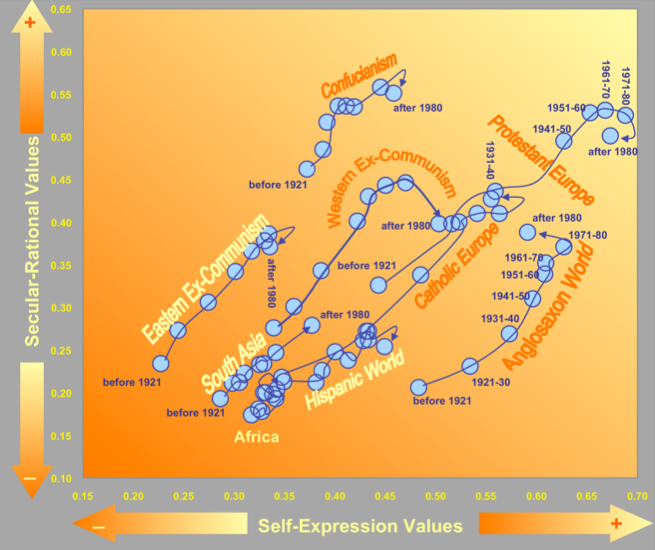
The graph above shows where WVS respondents fell on two values scales by birth year, within various groups. Within each group, Millenials are represented by the blue dots for those born after 1980. This evidence from the WVS suggests that the Millennials generation demonstrates higher self-expression than most of the other generations within each group. Greater self-expression values means having more action resources – both material and cognitive. The chart below highlights the chain reaction set off by these action resources.
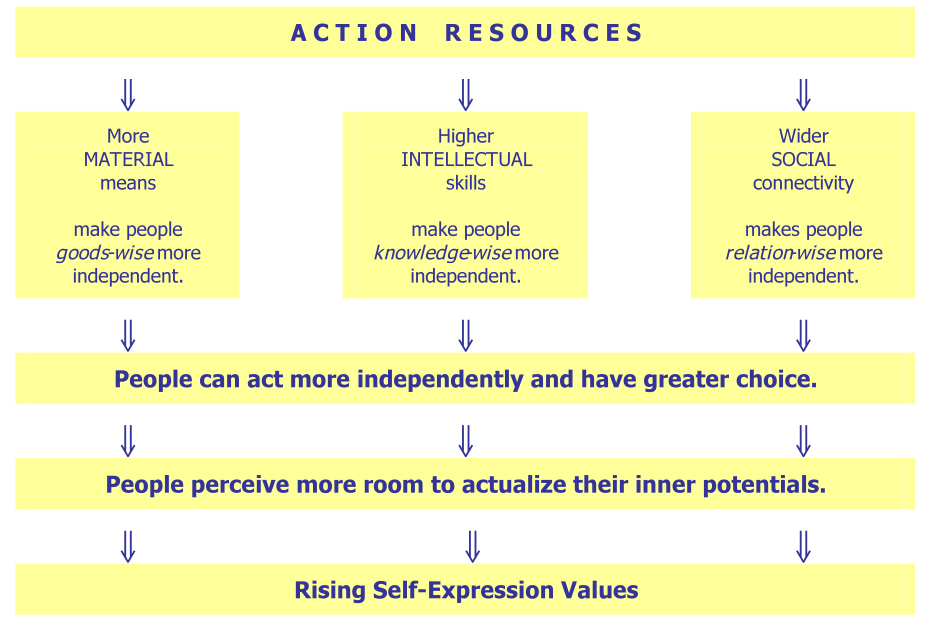
How can we see this enhanced self-expression in action? In support for environmental protection, tolerance of diversity and out-groups like foreigners and LGBT populations. In valuing political and economic participation. And in emphasizing imagination and tolerance when rearing children. Also accompanying higher self-expression values are a greater sense of subjective well-being and interpersonal trust. These trends bring hope for the future led by the often vilified Millennial generation.
Jan 2, 2014 | Current Events, Foreign Affairs, International
Developed by Katie Brown in coordination with Ronald Inglehart.
The World Values Survey tracks values and cultural change over time and across the world. Conducted in five waves from 1981 to 2007 – with a sixth wave being collected now – the survey samples from 90% of the world’s population.
The World Values Survey is especially interested in human empowerment. To map the process of empowerment, World Values Survey researchers created the Utility Ladder of Freedoms. Climbing the ladder means moving from a life based in threats to a life based in opportunity. Nations can climb the ladder as their citizens have more ways to improve their daily lives, like education. Typically, the higher a nation climbs on the ladder, the more universal freedoms are tolerated and practiced within that nation. Here, we use the ladder to take a closer look at the country of Turkey.
In August 2013, the Center for Political Studies (CPS) Blog featured a post about the protests in Turkey, suggesting that the government’s violent response was related to Turkey’s weak democracy. Since that time, the protests in Turkey have settled down. However, Turkey’s bid to host the 2020 Olympics has replayed some of these earlier tensions. Some have expressed that the political transformation and violence would make the selection of Turkey a risky choice. After Japan was instead selected to host the 2020 Olympics, some Turkish citizens actually celebrated, using the opportunity to criticize the Turkish government.
So, where is Turkey in its climb up the Utility Ladder of Freedoms?
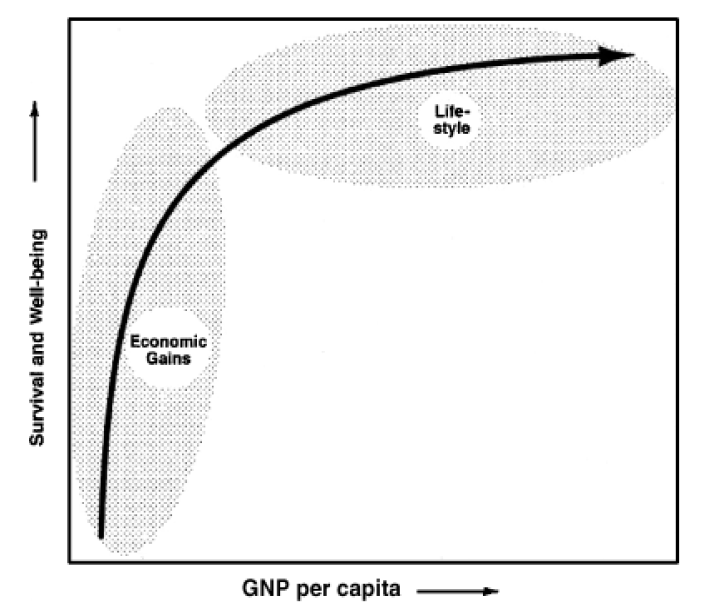
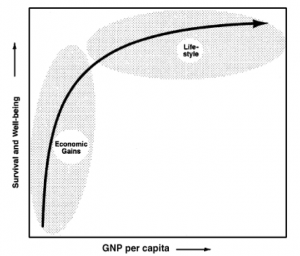 Let’s start with Happiness. The World Values Survey asks about happiness and life satisfaction – what we’ll call Subjective Well Being. An article by CPS Researcher Inglehart, Roberto Foa of Harvard University, the late pioneer of positive psychology Christopher Peterson, and Christian Welzel of Germany’s Leuphana University, looks at the determinants of Subjective Well Being. As the chart to the left shows, Subjective Well Being rises very quickly as Gross Domestic Product (GDP) rises, but then levels off. An earlier Inglehart study from 1991 also finds a connection between GDP and life satisfaction. So, earning more money means higher well being, but only to a point.
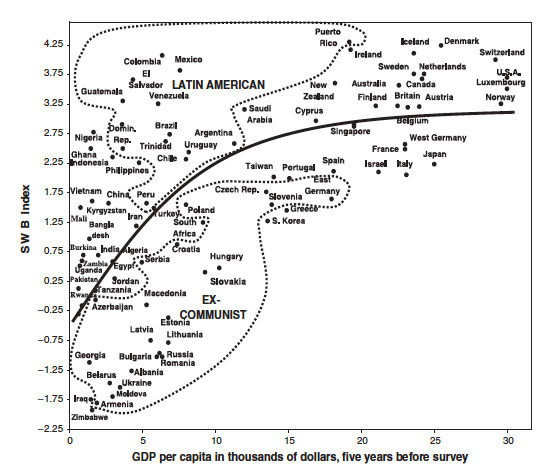
Now let’s consider Turkey. The graph below plots the GDP of specific countries against their reported Subjective Well Being. Turkey has a lower GDP and a Subjective Well Being at the mid-point between survival and well being. Inglehart’s earlier work finds that the as Subjective Well Being increases, so does democratic potential. So, Turkey’s mid-level happiness correlates with its weak democracy.
Subjective Well Being vs. GDP
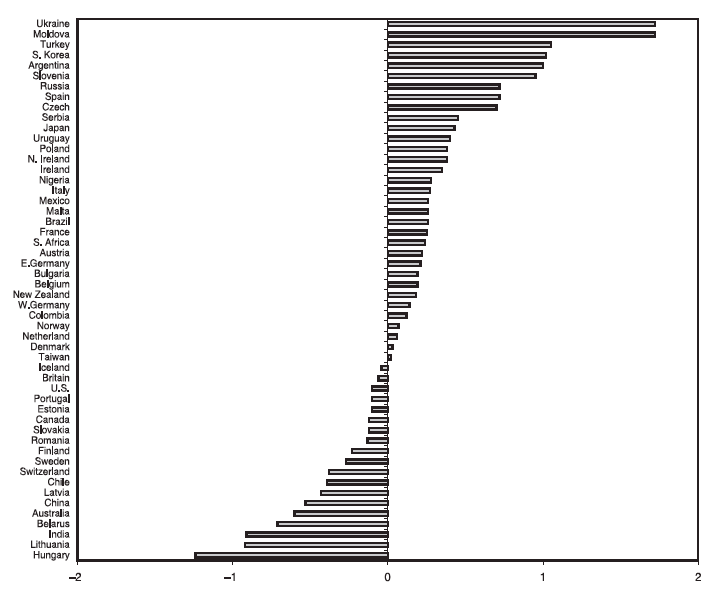
But, Turkey’s Subjective Well Being is on the rise. The chart below shows that Turkey’s Subjective Well Being is increasing faster than most other nations. By that logic, Turkey’s democratic potential should also be on the rise.
Subjective Well Being
Position on the Utility Ladder of Freedoms depends on choice, equality, autonomy, and voice – all qualities that also act as keys to democracy. Turkey’s Subjective Well Being and its potential for democracy are on the rise. So, Turkey seems poised to climb the ladder. However, the sometimes disconnect between the country’s government and citizens, occasionally to violent ends, suggests that moving up the ladder can be a rough climb.
Dec 19, 2013 | Foreign Affairs, International, Profile
Developed by Katie Brown and Mark Tessler
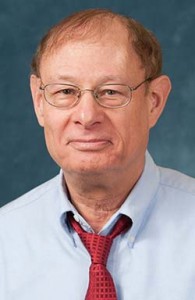 If you ask Mark Tessler about the trajectory of his work, he smiles. His career path was never planned; rather he took advantage of unexpected opportunities along the way. Among these was the chance to spend part of his undergraduate education as a student at the Hebrew University of Jerusalem and part of his graduate education as a student at the University of Tunis.
Since completing his studies, Tessler has conducted research in Tunisia, Morocco, Israel, the West Bank, and Egypt. He has also lived and taught university in several Sub-Saharan African countries.
Not surprisingly, one of Tessler’s areas of research is the Israel-Palestine conflict. Spending time in both Israel and Palestine has enabled him to witness first-hand the legitimate aspirations of both sides and has shaped his perspective on the conflict. He has published extensively on the subject. His scholarship, which emphasizes rigor as well as political and cultural sensitivity, includes articles in World Politics, the Journal of Conflict Resolution, International Studies Quarterly, and a prize-winning 1000-page book, A History of the Israeli-Palestinian Conflict. Tessler describes his approach to the conflict as “objectivity without detachment.”
Tessler’s broader research questions focus on the individual-level of analysis and investigate the normative and behavioral orientations of ordinary citizens in the Middle East and North Africa. In particular, he studies how people sort out who they are, what kind of society they want to live in, and by what kind of political system they want to be governed. Some of the findings from this research are brought together in his 2011 book, Public Opinion in the Middle East: Survey Research and the Political Orientations of Ordinary Citizens.
Currently, Tessler is working on a new and original public opinion database. With support from the Carnegie Corporation of New York, the database pulls together data from 44 nationally-representative surveys conducted in 15 countries in the Middle East and North Africa. Tessler carried out some of these surveys with support from the National Science Foundation and other foundations and agencies. Other surveys are from the Arab Barometer, which Tessler co-directs, and from the World Values Survey.
Key variables in this unique database include respondent attitudes toward a wide range of political and social issues, particularly those pertaining to governance and to Islam. Also included are major political, economic, and demographic characteristics of the country of which the respondent is a citizen. The database thus permits both separate and integrated individual-level and country-level analyses.
Though not planned, Tessler’s choice to dive into opportunities as they appeared helped to create an illustrious career. He has authored, coauthored, or edited 15 books and published over 125 book chapters and journal articles. Mark Tessler is a Center for Political Studies (CPS) Researcher and Samuel J. Eldersveld Collegiate Professor of Political Science at the University of Michigan.
Dec 13, 2013 | Foreign Affairs, Innovative Methodology, International
Developed by Katie Brown in coordination with Robert Franzese
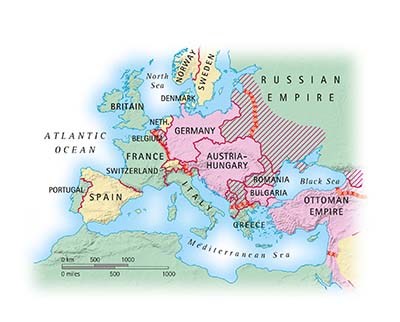 The map to the left shows Europe during World War I, including Italy and Romania. Can a graph illustrate how Italy’s decision to enter the war influenced Romania’s decision to do so?
Social scientists seek to understand social, political, and psychological phenomena. Quantitative research methods used by scientists can help investigate what factors cause specific outcomes (effects). Often, however, a factor in one unit causes an outcome in that unit, and that outcome then becomes a factor that causes outcomes in other units. Center for Political Studies (CPS) researcher and Professor of Political Science Robert Franzese, along with his coauthor and former member of CPS Jude Hays, has been studying ways to understand the relationships not just between cause and effect in one unit, but between causes and effects across multiple units, over time. That is, how to identify and estimate what is called spatial and spatiotemporal interdependence.
Franzese, along with Hays and their colleague Lena Schaeffer, presented a paper at the annual meeting of the American Political Science Association (APSA) that outlines the shortcomings of most approaches to the connection between causes and effects across multiple units over time. Then, the paper highlights some more promising models.
To illustrate how these more promising models work, let’s consider a specific application: investigating the decision of nations to enter World War I. This decision depends not only on domestic and international structural factors, but also on the decision of other nations to enter the war.
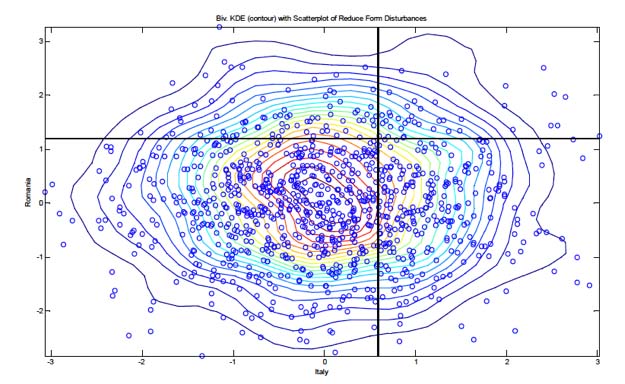
With this in mind, how did Italy’s decision to enter World War I influence Romania’s decision to do so? The below graph shows a simulation of 1,000 different possible outcomes (as dots on the graph), using Franzese’s model. From the set of simulations on the graph, we learn that when Italy joins the war (as indicated by the number of dots which appear to the right of the vertical cutoff line), Romania also joins the war 15.6% of the time (as indicated by the number of dots which appear above the horizontal cutoff line). Furthermore, when Italy does not join the war, Romania still joins the war 12.3% of the time. The difference between these two numbers – 3.3% – is thus the the impact of Italy’s decision to enter the war on Romania’s decision to enter the war.
This simulation is just one illustration of an application of spatiotemporal interdependence. Models such as these can help social scientists understand a variety of scenarios where interdependence occurs, with some of many other examples being:
- the relationship between the votes of legislators, the votes of citizens, and election results;
- the outcomes of coups, revolutions, and riots; and
- the entry of countries into treaties or alliances.
Dec 5, 2013 | CLEA, Innovative Methodology, International, National
Developed by Katie Brown and Jill Wittrock in coordination with David Backer, Allen Hicken, Kirill Kalinin, Ken Kollman, and Walter Mebane
Photo credit: Thinkstock
Voter fraud is an important problem, and it knows no geographical boundaries. In the last two months alone, allegations of voter fraud made the news. Some 1,000 citizens of Beit Shemish, Israel protested in demand of new elections amid evidence of foul play in an earlier vote. A Florida congressman’s former chief of staff was sentenced to prison for trying to rig an election. Similar stories also came out of Wisconsin, Texas, Michigan, Nebraska, Kansas, North Carolina, New York, Iowa, Egypt, Japan, and New Zealand, to name just a few from just the last few weeks.
Voter fraud is an important problem. When ballot results are viewed as corrupted by some process, elections have the potential to be destabilizing, and in extreme cases, can trigger violence and political regime change. For example, the suspicions surrounding the results of the 2007 Kenyan presidential election triggered large-scale turmoil, leading to more than 1,000 deaths. Observations from international election monitoring in 170 countries indicate 61% of countries experience some degree of cheating, including election fraud, with 27% countries in the sample exhibiting major fraud problems.
But how can we measure it? And how can we give election monitoring agencies the tools they need to pinpoint potential hotspots before an upcoming election? Researchers Walter Mebane and Kirill Kalinin at the University of Michigan have refined a set of tools that capture different aspects of potential election irregularities. Some of these methods are informed in part by techniques developed for detecting financial fraud: numbers changed by humans tend to have patterns that wouldn’t have occurred through the normal process of casting a ballot. Other methods derive from other mathematical regularities or feature simulations of what votes affected by fraud look like. Such methods have revealed fraud in recent elections in Russia, Iran, and Uganda. However, vast amounts of election returns are needed to conduct the data analysis, and many of the tests of election fraud have relied on precinct or polling station results, which can be difficult to get from governments, especially ones under suspicion of engaging in fraudulent behavior.
Enter the Constituency-Level Elections Archive (CLEA). Three of the co-directors of CLEA (Ken Kollman, Allen Hicken, and David Backer) are teaming up with Mebane and Kalinin to provide high quality and detailed constituency-level election results. Together the researchers are testing whether tools developed for detecting fraud using precinct results will also work at a higher level of aggregation, namely the district-level. CLEA provides cleaned and uniformly formatted results for elections around the world. Preliminary results from recent elections in Russia, Uganda, and Mexico suggest that different fraud detection techniques accurately estimate the probability of suspicious behavior at the district-level. For instance, in Russia, serious irregularities were widely alleged by both election monitors and Russian voters. Mebane and Kalinin found significant and substantial evidence of fraud using a range of fraud detection techniques, thus corroborating the firsthand account of monitoring organizations and Russian voters.
Next steps include applying these techniques to the remaining 1200+ elections in the archive with the end goal of providing baseline estimates of likely cases of fraud. Armed with this information, election monitoring organizations will have a sophisticated tool to complement their efforts at promoting free and fair elections. Over the short run, such results can assist monitors in focusing attention on problematic areas in specific countries, but in the long run, these detection techniques have the potential to deter those who wish to engage in election manipulation.