
Nov 11, 2025 | 2025 Analysis, Current Events, Elections, expert analysis, National
Democrats had a big night last week, sweeping key elections and winning by unexpected margins up and down the ballot. Voters showed up in high numbers for an “off” election year and sided with Democrats in the elections’ four major contests: The mayor’s race in New York City, the governors’ races in Virginia and New Jersey, and the redistricting measure Prop 50 in California.
Tyler Simko is an Assistant Professor of Political Science at the University of Michigan, and an affiliate of the Center for Political Studies at the Institute for Social Research. Simko specializes in U.S. state and local politics, political geography, and computational social science. He is applying this expertise as an elections analyst for CBS, and he shared with us about the experience of doing this work and the major takeaways from the 2025 elections.
Expert Q&A with CBS Elections Analyst Tyler Simko
The content has been lightly edited for length and clarity.
1. What were your top takeaways from the 2025 elections?
Two specific trends stick out to me.
First, this was a stronger performance for Democrats than many people expected.
The election outcomes were not especially surprising. For all four major races, the expected result going into election day happened—for example, most polls before election day saw Mamdani, Sherrill, Spanberger, and “yes” on Proposition 50 as the clear frontrunners.
However, the final margins in favor of Democrats were larger than many people expected. For example, most polls placed Mikie Sherrill as the favorite, but polling averages showed a lead of around 3-5 percentage points. The ultimate election was a blowout, with Sherrill ahead with a final margin around thirteen points. Abigail Spanberger won the governor’s race in Virginia by even more.
The second major takeaway for me was that early analysis suggests that some of the “red shift” we saw in 2024 among groups like Latinos may have reverted back toward Democrats.
For example, high-Latino communities in New Jersey saw huge reversals toward Sherrill from the way residents in those same places voted in 2024 for Harris.
Results like these suggest that some of the shifts we saw in 2024 may not be set in stone. Charles Stewart III, another election analyst on the team and a Professor at MIT, has suggested this might be evidence that 2024 was a “deviating election,” rather than a new normal, citing research originally developed at the University of Michigan in the 1960s.
2. Was there anything notable about turnout for this election?
Turnout was unusually high in nearly every race on Tuesday night. In some ways, this is surprising because 2025 is an “off” election year without presidential or congressional midterm elections.
However, this high turnout reflects just how salient politics is for many Americans right now.
For example, early voting and election day turnout in the NYC mayoral election eclipsed the last election in 2021. This continued the trend we saw in the primary, where early voting more than doubled turnout in the last primary that elected Eric Adams. Turnout in other races was high as well, like California’s Proposition 50 measure on redistricting.
Further, it’s especially interesting to see where turnout was higher compared to past elections.
Patterns in turnout changes can offer insight into where voters are particularly energized right now.
For example, I wrote for CBS that many Democratic-leaning areas in New Jersey saw huge surges in turnout (some nearly 40% higher than the last gubernatorial election in 2021). This suggests that Democrats are particularly politically motivated right now, a trend that party leaders will hope continues into next year’s midterm elections.
3. What do you do as an Election Analyst on the CBS News Data Desk?
For this past election night on November 4th, I worked in the CBS Office in New York City alongside a team of other analysts to predict and analyze the elections for NYC Mayor, NJ/VA Governor, and California’s Prop. 50 redistricting referendum.
On election night the Data Desk is focused on forecasting voter turnout and predicting election results. We analyze data like exit polls and election returns as they come in, and look for interesting patterns. As with any network, one of our primary roles is to “call” the election winners.
But beyond calling the races, we’re also actively monitoring other data beyond vote shares. For example, the NYC Board of Elections frequently updates their “check-in” turnout numbers throughout the day. We use these records to help improve our turnout forecasts, which help us identify patterns early in the night. For example, even before election night, strong early voting in New Jersey’s Democratic-leaning areas suggested it would be a good night for Mikie Sherrill.
Finally, a good deal of work happens both before and after the elections too. For example, some members of the team prepare products like the CBS Exit Polls in preparation for election day.
Similarly, after election day there is a ton of new data to analyze. For example, the morning after election day, Kabir Khanna (Director, Election Analytics & Technical Systems at CBS) and I wrote an article for CBS News demonstrating how high turnout in Democratic-leaning counties strongly favored Sherrill. We’ll continue conducting this kind of analysis in the coming weeks.
4. What are the goals of this work, and how do your expertise and skills meet the needs of delivering election results and analysis?
Predicting election results (before they happen) and analyzing returns (after they happen) require knowledge of both electoral systems and statistics. At the University of Michigan, I teach courses on American Politics and Political Methodology in the Political Science department and research topics in political institutions and computational social science, so this kind of work is right up my alley. You know, I used real data from election night for an interactive prediction activity in my graduate-level Machine Learning course this past week.
Calling election results is a classic prediction problem. You don’t have complete information before election night is over, but you would like to use statistical “signals” to make data-driven predictions about what is going to happen. Often, we use statistical models because we want to detect patterns over the course of election night that may not be clear from simply counting returns as they come in.
For example, imagine a hypothetical situation where votes for NYC Mayor from Staten Island all come in first, early on election night. A simple “counting” approach would predict Andrew Cuomo had a large lead in the mayoral election because he had strong support in Staten Island, while in reality Mamdani clearly won overall. Statistical models help account for these patterns like geographic segregation in candidate support. Training in both political science and statistics/data science helps.
5. What are the future implications of the 2025 election results?
I think this set of results has two important implications:
First, this strong Democratic win will change the political dynamics over the next year as we head into the midterms. In the meantime, these results also give national Democrats more leverage in ongoing debates like the government shutdown.
We also might see these results change political rhetoric over the next few months. For example, Mamdani’s campaign focused on affordability and we have already seen Trump adopting this language in recent interviews.
The second major signal comes from the strong passage of California’s Proposition 50. This result greenlights Democratic efforts to push back against the new Texas redistricting plan that made their existing gerrymander even more extreme.
Republicans currently have the lead in this redistricting “war” because they have aggressively gerrymandered maps in several states. But, Prop. 50 will likely embolden Democrats in states like Virginia to try gerrymandering their own favorable plans.
Some of my own research helps clarify the consequences of gerrymanders. My co-authors and I at the ALARM Project—a research group focused on political geography and public policy—have shown that gerrymandering makes congressional elections less competitive and less responsive to the will of voters. Our research also shows that these other states could learn from Michigan, as our independent redistricting commission helps ensure redistricting plans are more fair and less biased.
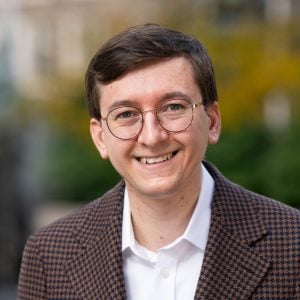
Tyler Simko is an Assistant Professor of Political Science at the University of Michigan, and an affiliate of the Center for Political Studies at the Institute for Social Research. This post was developed by Tyler Simko and Tevah Platt, communications manager for the Center for Political Studies.
Oct 13, 2025 | 2025 Analysis, Current Events, International, Race
A new survey on the nature and distribution of American stereotypes about Jewish, Muslim, and Black Americans measures the nature, extent and distribution of stereotypes about each of the three groups.
The broad goals of the survey and analyses of the data are:
- to map the dimensional structure of prevailing stereotypes about each group
- to map the distribution of these stereotypes across important population categories
- to explore the relationships between stereotypes of different religious or ethnic groups,
- to test hypotheses about probable determinants of various stereotypes
The survey was designed and carried out by Mark Tessler and Francy Luna Diaz of the University of Michigan and Amnon Cavari, associate professor of Political Science at Reichman University in Israel.
A research brief including preliminary results from the survey reports findings on some of the negative stereotypes about each group that the survey examined. Results on additional questions, including positive stereotypes and questions about US foreign policy and the Israeli-Palestinian conflict, will be forthcoming.
The brief focuses on the degree of agreement with two negative stereotypes about Jewish, Muslim, and Black Americans, respectively, which is not the same for the three groups; how responses pertaining to stereotypes are associated with differing levels of education, and how agreement with stereotypes across groups are correlated.
Read the Research Brief: Some Preliminary and Partial Findings on American Stereotypes about Jewish, Muslim, and Black Americans: Evidence from a 2024 US Survey
The Research Brief was published by the Center for Political Studies at the University of Michigan Institute for Social Research.

Jun 24, 2025 | Current Events, expert analysis, National
In recent years, global crises have increasingly come to define the times we live in. These big challenges, ranging from climate change and political instability to frequent mass shootings, can contribute to a pervasive sense that the future is doomed.
Emergent evidence suggests that many Americans have adopted future outlooks that are not just pessimistic, but apocalyptic. In a 2022 PEW Research study, 39% of respondents believed that humanity is “living in the end times.”
Understanding the Apocalyptic Mindset
The idea of an “apocalyptic mindset” refers to the belief that America’s future is bleak and uncontrollable.
The concepts of the “end times” and the apocalypse have roots in Christianity but also figure in secular narratives about the future. Political scientist Erik Bleich and classics scholar Christopher Star show that over the past four decades, the news media frequently framed secular threats like nuclear war, climate change, disease, and artificial intelligence in apocalyptic terms.
In tumultuous times, people have historically turned to apocalyptic narratives to make sense of and give meaning to negative events. Reflecting the media’s bleak coverage of contemporary crises, the public may interpret today’s hazards as signs of greater catastrophe on the horizon.
What happens when people think so negatively about the future?
Research indicates that people who are pessimistic about their personal futures are less politically engaged. However, research on the political impacts of pessimism about society’s future is scarce.
Measuring future pessimism
To investigate how broad societal pessimism affects political behavior, I fielded a study of 2,053 Americans in April 2024 on Cloud Research, an online survey platform. First, I developed the apocalyptic mindset scale. The scale includes five items that broadly assess projections about the future state of the world and society’s ability to handle future problems. For instance, the scale asks respondents how bright or dark they think the American future will be and how possible or impossible it will be to overcome America’s future problems.
Overall levels of apocalyptic mindset are nearly normally distributed in the sample. The scale ranges from 0 to 1, with 1 being the most pessimistic. The average in this sample is roughly 0.6 and 56% of the sample score higher than this average on the apocalyptic mindset scale. This result is striking because it shows that extremely pessimistic beliefs about the future are not merely fringe beliefs.
Still, some groups are higher on this scale than others. Those highest in apocalyptic mindset tend to be women and less educated individuals. Non-Christian and irreligious people also tend to be higher on the scale than their Christian counterparts, suggesting that extremely negative visions of the future are not exclusive to Christianity.
There are, however, no differences on the apocalyptic mindset scale by partisan identification. This result helps rule out that the scale is simply capturing political grievances about the current party in power.
Impact on political participation
How does apocalyptic mindset relate to political behavior?
On this survey, I asked about voting and other non-voting forms of political participation. Most respondents reported that they were “very” or “extremely” motivated to vote in the 2024 presidential election. For those highest in apocalyptic mindset, average motivation to vote drops by about 10 percent. While I do not know if participants actually voted in the 2024 election, these results suggest that those high in apocalyptic mindset were less likely to turn out.

Note: Motivation to vote is measured on a five-point scale ranging from 0 “not at all motivated” to 1 “extremely motivated.” Apocalyptic mindset is split into 3 quantiles, where the highest group is the most pessimistic.
This study also included questions about other, non-voting forms of political engagement. I asked participants if within the year, they had or planned to attend rallies, talk to others about voting, donate to a campaign, volunteer for a campaign, or display campaign merchandise like yard signs. I compiled all these activities into a single scale of non-voting participation and tested whether apocalyptic mindset can predict these behaviors.
Like motivation to vote, higher levels of apocalyptic mindset in this study were associated with lower levels of non-voting participation. Though they estimate opposite patterns of engagement, apocalyptic mindset and income have similar levels of predictive strength. Apocalyptic mindset is also a stronger predictor of non-voting participation than some other conventional predictors, like education and age.
The bigger picture
In response to an ever-threatening world, it may be rational to expect the worst for the future. My findings show that extremely negative beliefs about society’s future are prevalent among the American people.
A concerning pattern also emerged in my results: Individuals with an apocalyptic mindset are significantly less motivated to vote and less likely to participate in non-voting political activities.
Yet these kinds of participatory activities could be an important outlet for average citizens to advocate for a better future.
When individuals harbor a bleak outlook and disengage from the very political processes that may alter the future, they risk fostering a self-fulfilling prophecy. The acceptance of bad outcomes as fate diminishes the chances of political solutions to the very crises fueling their pessimism.
 Avery Goods is a PhD candidate at the University of Michigan, studying American Politics and a Converse Miller Fellow in American Political Behavior affiliated with the Center for Political Studies at the Institute for Social Research. She is broadly interested in political psychology, political communication, media, and survey design. Her current work focuses on how perceptions of the future shape political behavior. Tevah Platt and Julia Lippman of the Center for Political Studies contributed to the development of this post.

Jun 16, 2025 | Current Events, International, Profile
A Special Exhibit opens June 19 in Berlin
This year marks the 80th anniversary of the end of World War II, and at a moment when global authoritarianism is on the rise, a tiny fraction of the people with memories of the war and Hitler’s Europe are alive today to relay their stories. It is increasingly the work of archivists and descendants to transmit the record of that time– to honor and reckon with the past, and to invoke what Elie Wiesel called “a prayer, a promise and a vow”: Never again.
A special exhibition opening June 19 at the House of the Wannsee (VAN-see) Conference Memorial and Educational Site on the outskirts of Berlin centers on the story of Fritz Traugott, a German Jewish refugee expelled from his native Hamburg, who returned to Europe as an American soldier.
Traugott was among some 10,000 “Ritchie Boys” in the U.S. Army– soldiers trained in intelligence gathering who graduated from Camp Ritchie, Maryland– and one of the 20 percent of that force who were Jewish refugees with language skills that were leveraged in the effort.
His letters to his wife at home in Providence, R.I., and photos he took at the Wannsee villa in the summer of 1945 are at the heart of the special exhibit that tells Traugott’s story but is as much about memory itself.
“In my mind, it’s not really a story about my father,” said Michael Traugott, who shared his father’s documents with Wannsee after discovering them in 2018. “I think he is kind of a vessel in this story for thinking about the 80th anniversary of the end of the war, and about what happened then, and how it relates to what’s going on now, and other events in between.”
A Portrait of Fritz Traugott
The youngest of three children, Fritz Julius Traugott was born in Hamburg in 1919. After the passage of Nuremberg Laws that sought to marginalize and separate Jews in German society in 1935, he was forced to leave the Lichtwark School, a prominent high school that emphasized cultural education and the fine arts. He remained in close contact with his classmates and his teacher, Erna Stahl, an influential educator who once characterized her own work as creating an “inner counterbalance” in her students to the “destructive, demonic denial of all human spiritual worth, especially in Germany, which could not be undone.”

A 1933/34 class photo of the Lichtwark School from the Traugott archive. Both in the back row, Fritz Traugott is third from the left, and Erna Stahl, fourth from the right. Six of the students in the photo are wearing Hitler Youth uniforms.
With professional opportunities likewise cut off, Traugott followed his brother in immigrating to the United States in 1938, and his parents followed. Traugott’s sister, Hedwig, remained in Hamburg with her non-Jewish husband and two daughters, surviving through Nazi persecution, forced labor, and the bombing of their home.
 Traugott married Lucia Scola, an Italian-American Catholic, in Providence.
At 22, he was drafted into the U.S. Army, where he was transferred to Camp Ritchie to learn counter-intelligence and interrogation techniques. He was first deployed to England to participate in the “secret listeners” program, an operation that helped record details using bugging devices to pick up conversations among German military leaders. They collected important intelligence information to help the war effort, including the location of the facility where V2 rockets were being built.
Traugott was sent to France where with his unit, Mobile Field Interrogation Unit #2, he later traveled behind American troops moving into Germany, interviewing prisoners of war. He was at the Battle of the Bulge, not as a combatant, but working feverishly to collect intelligence from German prisoners. And just after Germany’s surrender, he was billeted at the Wannsee villa from July to September 1945. His unit was housed at the former SS guesthouse that– although his unit may not have been initially aware of it– had been the site of a pivotal Nazi summit a few years prior to plan “the final solution.”
The Summer of 1945
Traugott spent more than two months at the Wannsee villa, a site referred to as “Himmler’s guesthouse,” during this early post-war period. He bought a camera in Berlin and sent pictures and daily letters to his wife in Providence, often on “souvenir” stationery from “the Führer’s adjutant’s office” he had found in the Reich Chancellery.

Based on the photos taken by Fritz Traugott, this artist rendering of the Ritchie Boys at the Wannsee villa was created for the museum by Mathis Eckelmann. Courtesy of the Wannsee Conference Memorial and Educational Site.
The photos and letters, now on display as part of the special exhibit at Wannsee, include snapshots of soldiers and prisoners of war at Wannsee, the nearby interrogation center, and the ruins of his former home he took on a visit to Hamburg.
His letters communicate his affection for Lucia and infant son, Michael, born in his absence. One personal account to his wife, written on pilfered Nazi letterhead on Aug. 10, 1945, describes how the normalization of persecution made it difficult to communicate and for outsiders to understand it:
You see sweetheart, when you live in danger, or misery, or any other extreme state, you kinda get used to it, or at least it loses most of the effect it has on outsiders.

From the Traugott archive, a letter home on the pilfered stationary of the “Adjutantur Des Führers,” August 10, 1945.
Traugott took two short visits to Hamburg to see his sister and the city he fled in 1938. On his second visit, his sister Hedwig wrote a letter to her parents describing what had happened to them under the Nazi regime. That letter, which is lost today, included details so troubling that Traugott and his brother decided not to deliver it, Michael Traugott said.
Traugott returned home in the fall of 1945.
Unearthing the Past
Traugott went on to rear three children in Providence– Michael, Mark, and Kathryn. He established his own jewelry company and later worked as a sales manager for the Colonial Knife Co.
Traugott seldom spoke to his children about his life in Germany or his time in the war. He had likely signed nondisclosure agreements during his service, his son said, and there were memories unwanted. Traugott avoided speaking German for a long period after the war and didn’t return to visit Germany for more than 25 years.
Traugott died in Palm Beach in 1995.
Lucia preserved the letters, photographs, and documents displayed in the exhibition.
It was only after her death in 2018 that their children discovered these historical sources: Over 300 letters and a few dozen photographs.
Michael initially made contact with the Wannsee Conference House with an emailed photograph of the villa with the American flag hoisted above it.
After two years of research and contact, the museum is presenting a special exhibit that centers on Traugott’s materials and experience.
History, Memory, and Extrapolation
The upcoming exhibit, which includes an audio tour in the gardens of Wannsee, brings with it a convergence of past and present, and of personal and global history that invites exploration into the legacy of perpetrators, victims, and liberators.
“Fritz Traugott’s biography, letters, and photographs provide us and our visitors with a different and new perspective on the history of the House of the Wannsee Conference,” said exhibit curator Judith Alberth. “His parents, his brother and he himself were expelled due to antisemitic persecution, and his sister, his brother-in-law, and his nieces survived the Shoah in Hamburg in desperate circumstances. Their stories add a significant perspective to the sources and biographies of perpetrators that the House is mostly linked to.”
“L’dor vador,” which translates to “from generation to generation,” is a central concept in Jewish culture, which places weighted emphasis on the passing of stories and traditions across time.
“Part of this journey recently has been a deeper recognition of this Jewish history, which we never lived, but has been brought to the forefront through the development of the exhibition,” said Michael Traugott, who had little exposure to religion aside from Catholic sacramental ceremonies growing up. “…There’s also an element of realizing opportunities that we lost to have extended conversations with our father – which he might not have wanted to participate in.”

Michael, Mark, and Kathryn Traugott, retracing their father’s steps at the Wannsee House
Traugott’s descendants– who will all attend the opening of the exhibit– have used the photographs and documents to plumb their family history. In 1994, Michael Traugott also took a trip to Berlin to retrace steps his father had taken and to reproduce photos his father had taken on the same grounds, 50 years prior.
“Sifting through the valuable sources and sorting them together can reconstruct a piece of family history,” Alberth wrote of the exhibit. “Further research, which we carried out in American and German archives, can add to the puzzle – but it will always remain fragmented.”
“This project has involved memory, but also extrapolation,” said Michael Traugott. “It’s both trying to reconstruct events of the past with relative accuracy, but thinking about how behavior, events, and belief systems might be extended forward in time to other events, and other periods.”
Traugott’s story invites us to imagine what it might have been like for a refugee to return to Germany in what his son described as “a strange re-immersion.”
Museum director Deborah Hartmann writes, for example, of what it might have meant for Traugott to appropriate stationary and souvenirs from places like the Chancellery: “The men demonstrated their own personal victory over the Nazi dictatorship,” she writes.
For Hartmann, the exhibit is also an occasion to consider how we remember past events, and the impact of memory on our political actions and national and community identities.
Research on collective memory distinguishes history and memory. French scholars Jean-Francois Orianne and Francis Eustache write that “history separates the past from the present and future, whereas memory links them together. Memory always operates in the present: it is a continual rewriting of the past in the present for future use.”
The exhibit ends with a photograph of Vice President J.D. Vance, visiting the Dachau Concentration Camp on Feb. 13, 2025. The next day, at the Munich Security Conference, Vance demanded that Germany’s far-right parties, including the AfD, not be excluded in coalition governments. AfD leaders have specifically repudiated the idea that we should educate future generations about atrocities in Germany’s past, as a safeguard to our future.
“The open and critical discourse on history is a core element of free, democratic societies,” said Hartmann. “Authoritarian governments therefore see it as a threat and seek to impose only the narratives they have set as valid. This repeatedly leads to distortions in the history of the Holocaust, which we must counter. When the leader of the far-right AFD party, in a conversation with Elon Musk on X, refers to Adolf Hitler as a ‘communist,’ and Musk agrees with her, they are denying the ideological origins of the Holocaust in racist antisemitism.”
The exhibition, which will run until next summer, opens June 19, 2025, with free daily admission from 10 to 6. The museum’s registration for the opening– which can be attended live or online– is now open.
This post was written by Tevah Platt, a communicator for the Center for Political Studies at the University of Michigan Institute for Social Research. Michael Traugott is a research professor affiliated with the Center for Political Studies and an expert on campaigns and elections, voting behavior, and political communication.

Apr 28, 2025 | 2025 Analysis, Current Events, expert analysis, Foreign Affairs, International, National, Policy
By ANNE PITCHER
What do the following activities, organizations, and companies have in common:
- The Soybean Innovation Lab in Illinois
- The delivery of food aid in Ukraine
- The provision of antiretroviral drugs to treat HIV in South Africa
- Neonatal care in Ghana
- John Deere tractors, and
- Land grant universities like Michigan State University?
All of them have benefitted from partnerships with, and/or funding from, the US Agency for International Development (USAID). Most of them have been significantly affected by stop-work orders affecting USAID that were issued after President Donald Trump took office.
The gutting of USAID within the first 100 days of the Trump administration has upended the aid sector around the world.
This post provides a brief overview of USAID: What does the agency do? What has happened, and what are the consequences?
So What Is USAID?
USAID was created by Congress in 1961 under President John F. Kennedy to administer humanitarian aid and programs on behalf of the US government. In recent years it has distributed some $40 billion annually in aid to 120 countries, providing support to address illness and hunger, neonatal care, clean water, electricity, and disaster relief. Among its many tasks, it promotes democracy all over Africa, conservation efforts in the Amazon, and awareness campaigns about clean air across Southeast Asia. Its spending, procurement, and project implementation procedures are subject to rigorous oversight and compliance regulations administered by the USAID Office of the Inspector General.
USAID does not give aid directly to governments. Instead, it often provides “tied aid,” meaning that the aid is conditional on recipients spending aid funding on American goods and services. For example, USAID might partner with a for-profit company like John Deere, which makes agricultural equipment, or agricultural seed companies like Corteva Agriscience, to deliver agricultural aid. USAID also provides funding to international nongovernmental organizations (NGOs) such as CARE, World Vision, Doctors Without Borders, or Catholic Relief Services, or domestic NGOs in Benin, Thailand, or Nicaragua that offer assistance in sectors from health care to education in developing countries. Some of these NGOs depend on USAID for a large percentage of their budgets. Finally USAID has partnered with US land grant universities like MSU to engage in research on water, electricity provision, or food security.
And although the much loved Peace Corps is a separate government agency it has worked closely with USAID. The Peace Corps was created in 1961 under the administration of President John F. Kennedy after he proposed it on a campaign stop at the University of Michigan when he was running for President. The Peace Corps has partnered with USAID on projects such as the Small Project Assistance Program to support community-driven projects such as the prevention of malaria or human trafficking, or disaster preparedness. Many Peace Corps volunteers often go on to serve rewarding and productive careers at USAID.

Washington, DC, USA- March 1, 2020: One of the entrance of United States Agency for International Development in Washington, DC, USA, an independent agency of the United States federal government.
What Has Happened?
On returning to office for his second and last term as President, Donald Trump signed an executive order that froze almost all international spending for a 90-day review. Cuts to foreign assistance were spelled out in detail on January 24, 2025, followed by the filing of termination and leave notices to USAID employees. In a lightning speed process, thousands of employees had been terminated by late February. As of last month, an estimated 50,000 US citizens and twice as many foreign service nationals had lost their jobs due to cuts. It has now been reported that many termination letters contained a number of serious errors which has affected severance pay and pension payouts for some USAID employees.
Besides domestic workers, thousands of people were contracted from all over the world to work for USAID. Many had loyally served USAID for decades. Those employees who work for USAID on annual contracts (as many who work abroad do) cannot file for unemployment. Some have been stranded in Egypt, Mozambique, Togo, and Cambodia, without a clear path for planning or paying for a return to the U.S. of themselves, their families, and their belongings.
With regard to USAID funds, approximately 5800 out of 6200 multi-year contracts, to the tune of $54 billion, have been cancelled. Waivers have been provided for life-saving humanitarian aid, but other requests have faced the problem that, with the dismantling of USAID, there are no staff in place to review them. Further directives issued in recent months have put exemptions on hold and another 42 of the remaining 900 contracts have been canceled. A USAID internal report notes that the stop work order was implemented so quickly that food aid was left rotting in ports and warehouses en route to its destination. Vehicles were impounded. Buildings shuttered.
After Elon Musk made a show of remedying an apparent error in DOGE’s massive cuts to foreign aid, the Trump administration quietly doubled down on its decision to stop sending emergency food to millions of children who are starving in Bangladesh, Somalia, and other countries, The Atlantic reported in April.
The Trump administration announced plans in March that USAID would come fully under that State Department and reduce its staff to about 15 positions. An email to USAID employees titled “U.S.A.I.D.’s Final Mission” detailed the plan despite lawmakers’ objections that the efforts to downsize the agency were unconstitutional. USAID employees were also ordered in March to shred and burn personnel documents.
What Are the Consequences?
Most affected by cuts to USAID include patients receiving drugs for HIV/AIDS prevention and treatment, and children in developing countries who get vaccines. In addition, they include women in Ghana receiving neonatal care, and approximately one million Rohingya from Myanmar whose rations in a refugee camp in Bangladesh will likely be cut in half if more funds are not raised soon. They include almost half of the population of Sudan who face acute hunger. Within weeks of the cuts to USAID, 80% of community kitchens across Sudan closed, leaving millions at risk of dying from starvation or preventable illness. Finally, they include Ukrainians receiving corn from American farmers.
Children around the world are already dying as a result of the cuts, and experts are projecting hundreds of thousands, perhaps millions of anticipated deaths in coming months and years from hunger, AIDS, and tuberculosis. Until recently, around 27 million children benefitted from nutrition programs that USAID funded; 4 million received antiretrovirals and 13 million others received treatment from the President’s Emergency Plan for AIDS Relief (PEPFAR), a health program started under President George Bush, which has now been halted.

Now, around 1,400 infants are being infected by HIV every day, an infection rate that might have been prevented had the new US administration not cut funding to USAID and HIV/AIDS organizations. About 3 million more children and adults will die from HIV-related causes before 2030 because of global aid cuts, according to projections published in HIV Lancet.
With respect to conflict prevention, Andrew Natsios, the former head of USAID under President George Bush, who identifies as a “conservative internationalist” has argued that there is a connection between rising food prices and conflict. He worries that without the food aid provided by USAID, we could witness an alarming rise in conflicts in developing countries that are vulnerable to spikes in food prices due to shortages or climate change. This could have demonstrable effects on our own national security and stability.
Several scholars have observed that these cuts also affect US national security by undercutting our reliance on soft power. Soft power relies on humanitarian relief, food aid, and democracy promotion that strengthens our alliances with other countries. An unintended aspect of soft power is that many of the foreign service nationals who work for USAID abroad often end up as members of parliament, heads of NGOs, or ministers in their own countries. This means the United States already has linkages and allies that serve national governments in other countries which has potential benefits for the US. Such connections will be weakened with the demise of USAID.
Finally, as we saw last month with the earthquake in Myanmar, the US retreat means our replacement by China and Russia, which ultimately undercuts our national interest and our moral standing in the world.
This post is based on a presentation by Anne Pitcher given at the second 2025 teach-in organized by University of Michigan faculty examining “US Democracy in Peril: National and Global Implications.” The event was held March 19, 2025, in the U-M Chemistry Building. Anne Pitcher is Associate Chair of Department of Afroamerican and African Studies and Director of Graduate Studies, and is the Joel Samoff Collegiate Professor of Political Science and Afroamerican and African Studies. CPS faculty have offered ongoing expert analysis on political events of 2025. Tevah Platt of the Center for Political Studies contributed updates to this report.

Mar 31, 2025 | Current Events, expert analysis, Michigan
By Franshelly M. Martinez-Ortiz
Conspiracy theories are not a new feature of American Society. Throughout history, many conspiracy theories have become a standpoint of pop culture—even when debunked by scientific evidence.
Research shows that half of Americans consistently endorse at least one conspiracy theory. This pattern continues today. According to a Pew Research Center survey, 25% of U.S. adults believe there is at least some truth to the claim that powerful elites planned the coronavirus outbreak. The persistence of debunked claims underscores the broader role that conspiratorial thinking plays in shaping mass opinion.
In the past, conspiracy theories were confined to marginal outlets and fringe networks. Today, they are pervasive in mainstream media. The presence of political figures who openly endorse and promote conspiratorial thinking reflects the growing appeal of these narratives among the public. This has reached new levels of salience with the confirmation of Robert F. Kennedy Jr. as the new Secretary of Health and Human Services, who has publicly claimed that Wi-Fi causes cancer and a “leaky brain.” His appointment indicates that conspiracy beliefs may play an increasing role in steering governance and public policy.
Government Suspicion
The mainstream assumption is that believing in conspiracy theories results from a deeper sense of paranoia or from falling for misinformation. However, conspiracy thinking is closely linked to government suspicion.
When people believe that powerful forces secretly control major events, they are more likely to question the motives and transparency of public institutions. Many people who are suspicious of the government have good reasons to be. Communities that have lived through government failures are often the most distrustful of public institutions.
This creates a tricky situation. How do we rebuild trust in government while recognizing the real harm it has done in the past?
Previous research has established a link between government suspicion, race, and education. However, my research (co-authored with Mara Cecilia Ostfeld) shows a more complicated story. It highlights a new factor driving this relationship: individuals’ proximity to and familiarity with government-inflicted harms.
For many communities, conspiracy thinking or suspicion toward government institutions is deeply rooted in lived experiences. Events like the Flint Water Crisis and the U.S. Public Health Service Untreated Syphilis Study conducted at Tuskegee are not distant historical moments; they are lasting traumas that continue to shape public perceptions of government accountability.
My research examines how familiarity with these injustices and identification with the communities affected contribute to government suspicion, particularly in Michigan.
Michigan Survey Findings
Through the Michigan Metro Area Communities Study (MIMACS), we surveyed Flint, Grand Rapids, and Ypsilanti residents to assess government suspicion levels and explore how past harm influences present-day trust.
The findings reveal widespread skepticism. Key findings:
- More than half of surveyed residents believe the public is routinely kept in the dark about major events.
- Black residents are the most likely to express government suspicion, with 64% holding this view, compared to 51% of Latino and 45% of White respondents.
- Education also plays a role—people without a bachelor’s degree report higher levels of suspicion 58% than those with more formal education 37%.
The impact of government suspicion extends beyond attitudes—it influences behaviors essential for democratic participation. Individuals who are more skeptical of the government are less likely to vote or trust public health guidance. Among respondents with low levels of suspicion, 87% reported that they planned to vote in the 2024 election, compared to just 71% of those with high levels of suspicion.
A similar pattern emerges with vaccine attitudes: while nearly all 98% of those with low government suspicion believe in vaccine effectiveness, support drops to 80% among those with high government suspicion.

Flint serves as a particularly striking example of how government failures contribute to long-term suspicion.
The city’s 2014 water crisis exposed thousands of residents to lead-contaminated water, leaving deep scars on public confidence in government institutions. Sixty percent of Flint residents surveyed expressed high levels of government suspicion– significantly more than in Grand Rapids or Ypsilanti. Familiarity with the crisis further amplifies suspicion—63% of Flint residents who are highly familiar with the water crisis report high levels of government suspicion, compared to just 37% of those with moderate knowledge of the event.

A similar pattern emerges when we examine the long-term effects of the U.S. Public Health Service Untreated Syphilis Study, in which Black men were intentionally denied treatment for syphilis between 1932 and 1972. The study has had a lasting impact on Black communities’ trust in medical institutions, and our data reflects this reality. Among Black respondents familiar with the study, 74% expressed high levels of government suspicion. While awareness of the study had a weaker effect on non-Black respondents, the historical weight of such an injustice continues to shape public trust in government and healthcare.
My findings demonstrate that government suspicion is not simply a product of misinformation—it is often a rational response to systemic failures and historical violence.
Government suspicion does not develop overnight; it is built over years of broken promises, neglect, and systemic harm. Understanding its origins is the first step toward repairing relationships between the government and the communities it serves.
About the Authors:
This post is based on the policy paper, “Trauma and Trust: How familiarity with government harm and identification with harmed groups shapes government suspicion in Michigan,” by Franshelly Martinez-Ortiz and Mara Cecilia Ostfeld.
 Franshelly Martinez Ortiz is a doctoral candidate in political science and public policy at the University of Michigan and a fellow at the U-M Center for Racial Justice. She is also a Converse Miller Fellow at the Center for Political Studies and a Next Generation Scholar at the University of Michigan Institute for Social Research.
Mara Cecilia Ostfeld is a faculty lead of the Detroit Metro Area Communities Study, a faculty associate at the U-M Center for Political Studies, and an associate research professor at the Gerald R. Ford School of Public Policy at U-M. She is an affiliate of the Center for Political Studies at the University of Michigan Institute for Social Research.
This research was supported by the Knight Foundation, the Ballmer Group, the Kresge Foundation, Poverty Solutions, and the Center for Racial Justice at the University of Michigan. For more details, visit Michigan CEAL.
CPS affiliates have also measured increasing mistrust in government in American political attitudes over time and written on its effects on increasing partisan hostility.
Tevah Platt of the Center for Political Studies assisted with the development of this post.